
About us
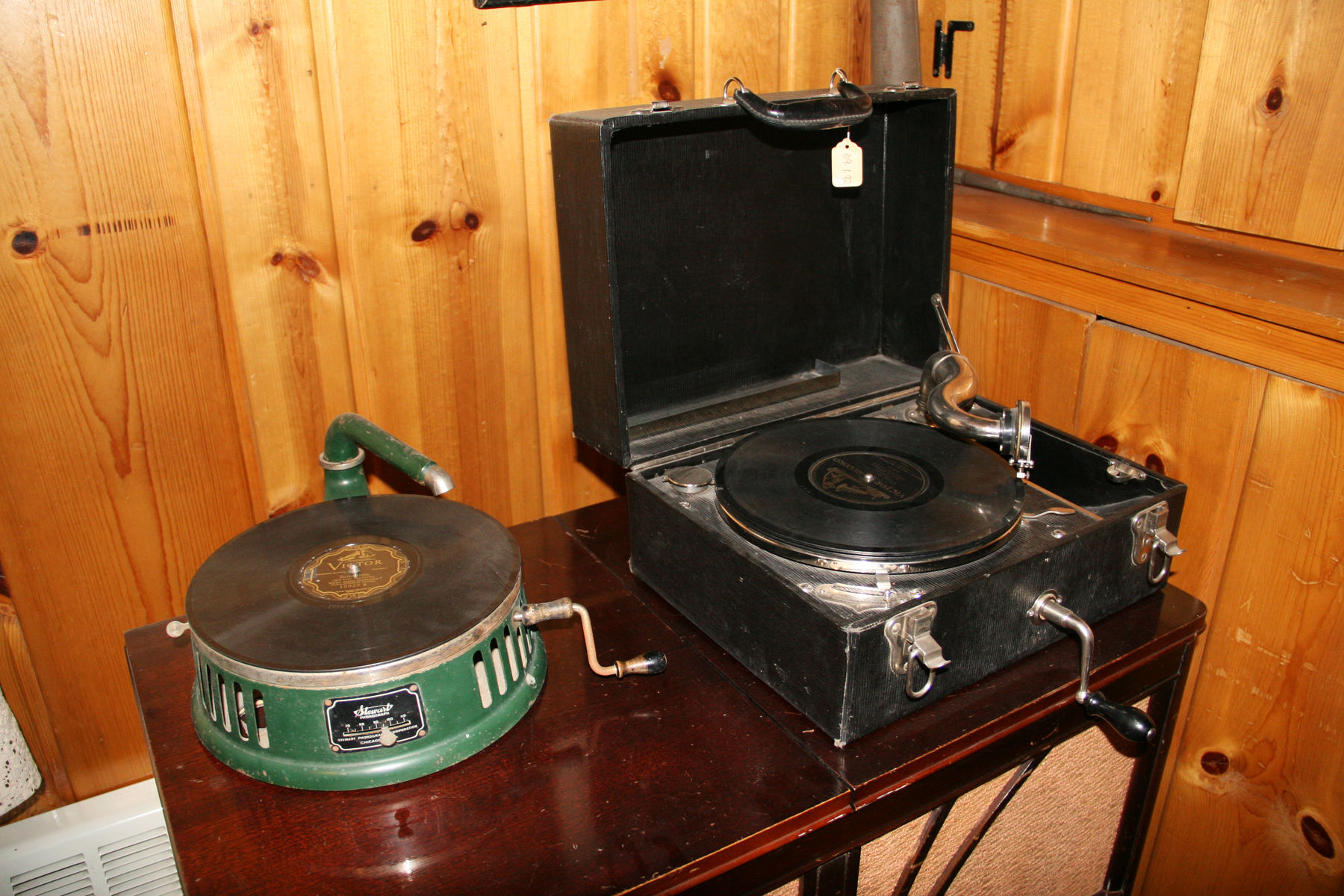
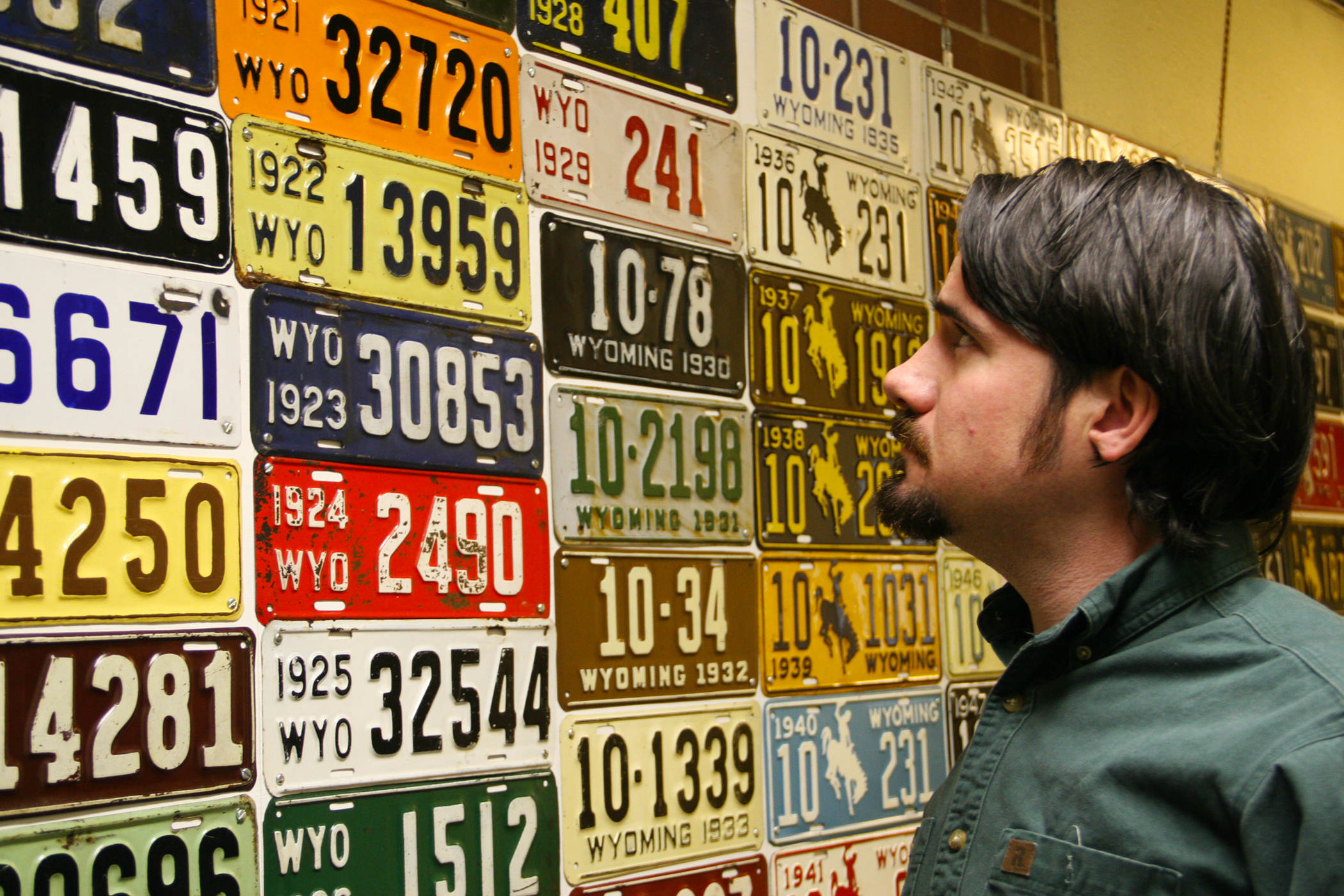
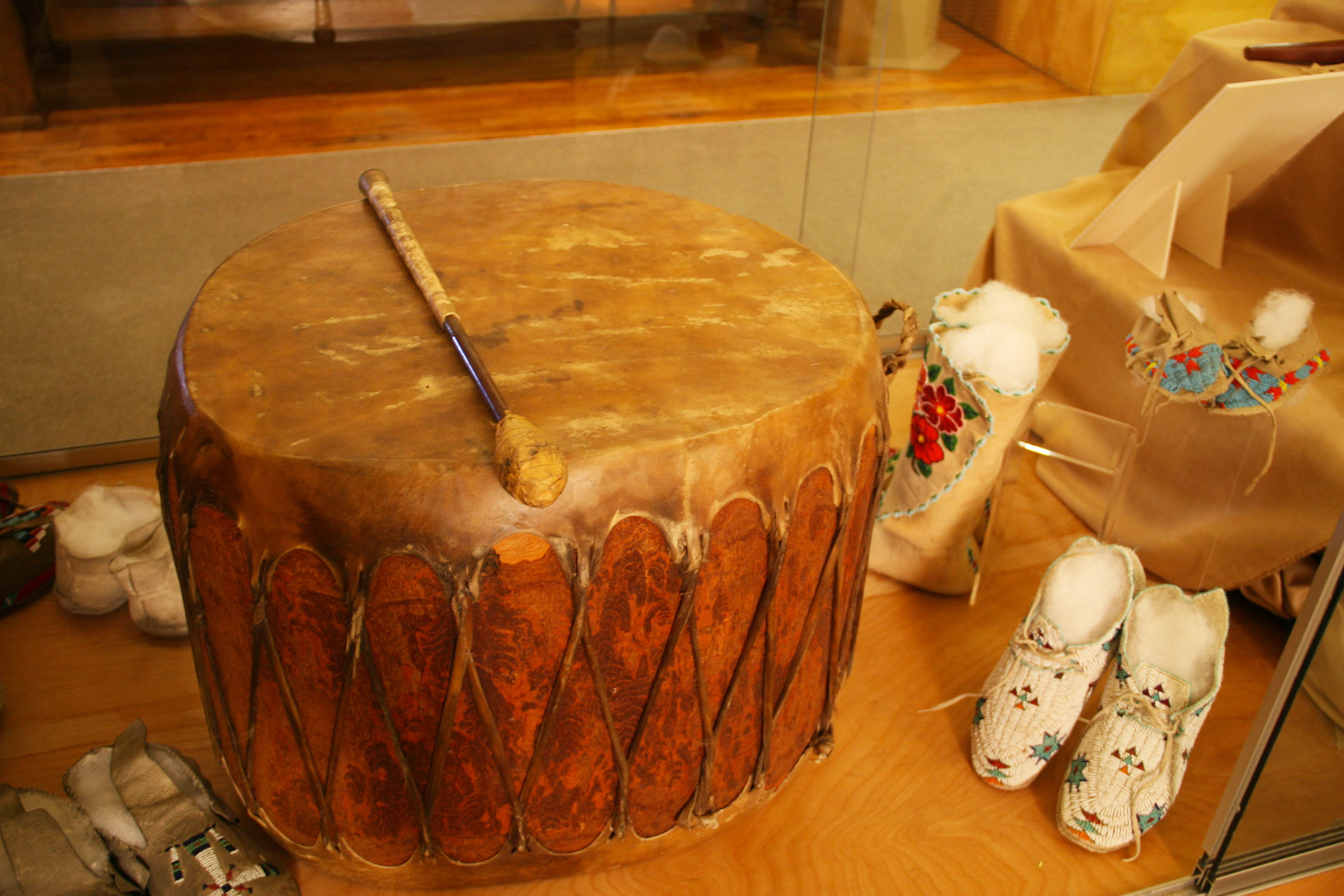
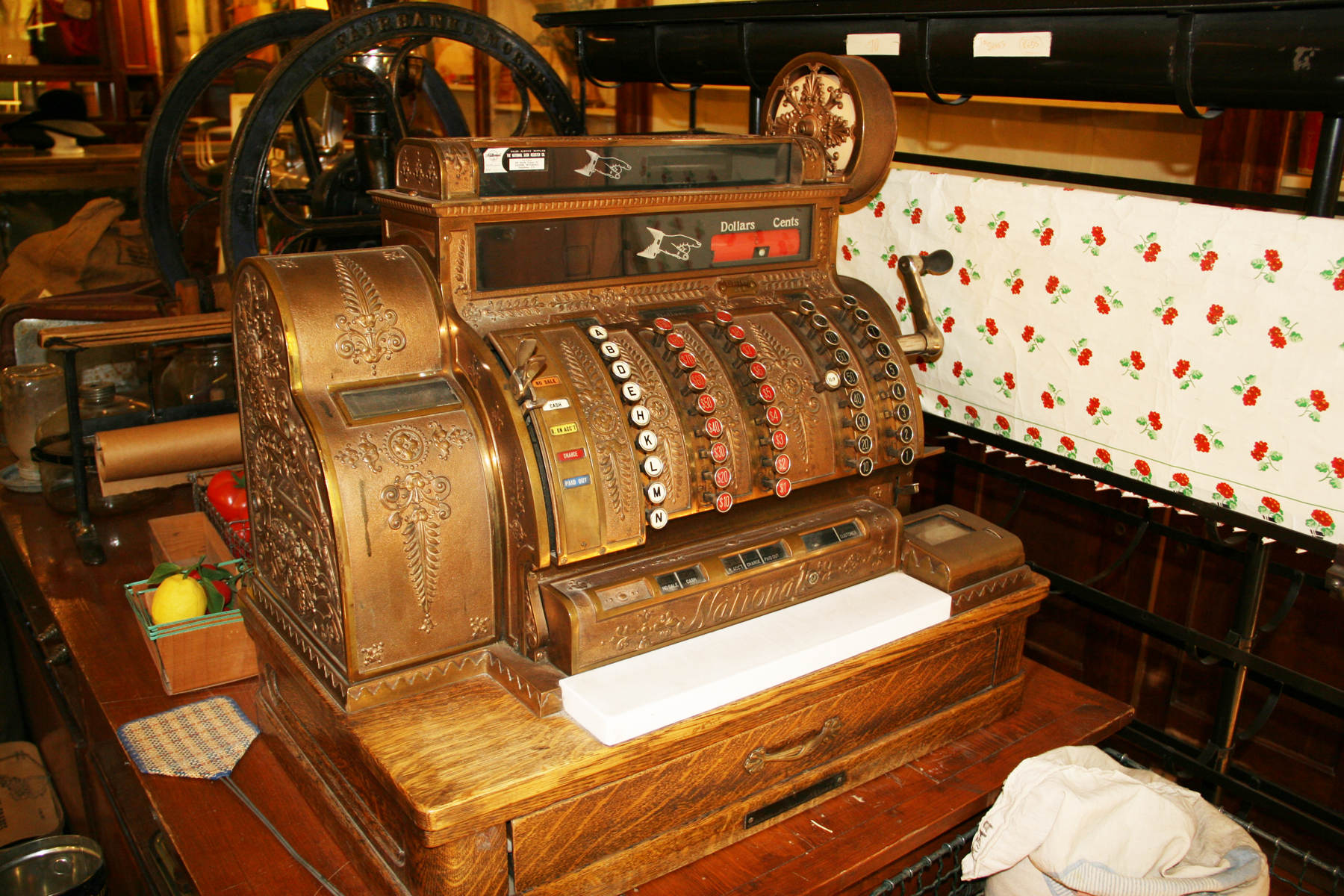
The Riverton Museum collects, preserves and interprets artifacts that have a direct association with Riverton history, eastern Fremont County communities, the Eastern Shoshone peoples, the Northern Arapaho peoples and regional history as it relates to Fremont County. The Riverton museum also may collect items that represent specific aspects of history and culture that help educate through the exhibits and programing.
Regular Programs
Programs
Children's Exploration Series
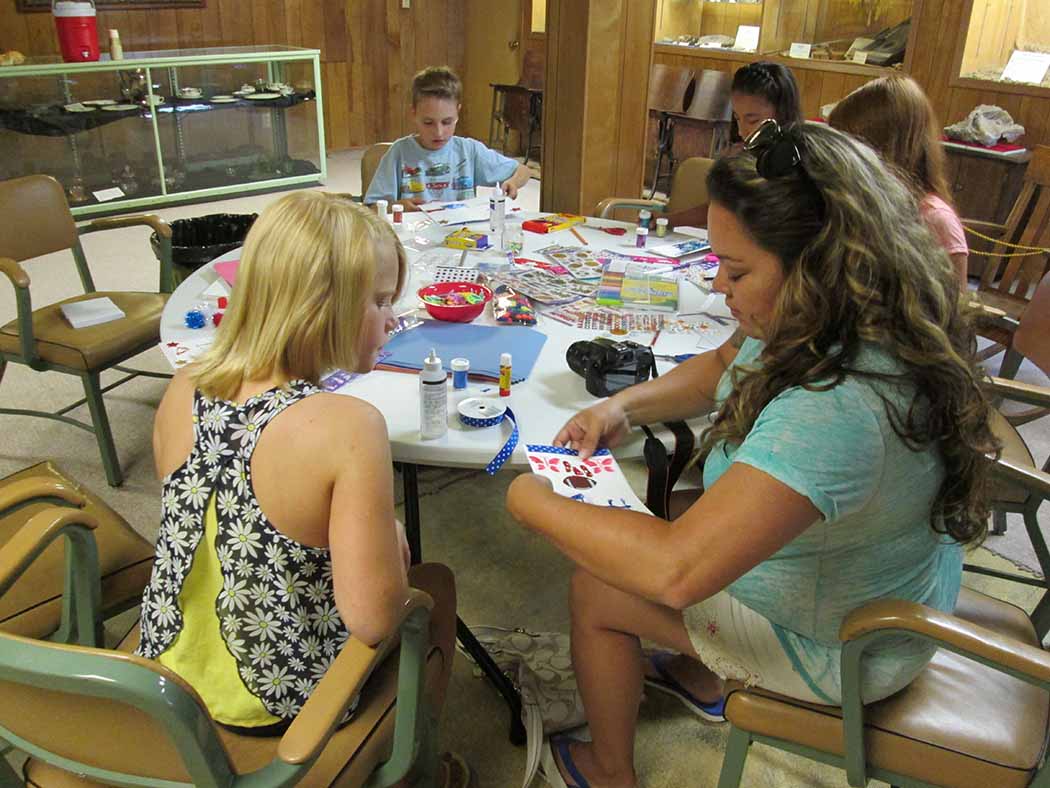
 The Children’s Exploration Series, sponsored by Pit Stop/Bailey Tire & Auto Care provide children with hands-on learning experiences that focus on cultural history and our natural environment. Geology, Archaeology, Native American culture, agriculture and pioneer history are the focus of the programs that children love to participate in.
Adventure Treks
 The Adventure Trek Series, sponsored by the Wind River Visitor’s Council is your opportunity to get into the country to explore, experience and walk in the footsteps of the rugged and independent people who discovered and settled the extraordinary Wind River region.
Discovery Speakers
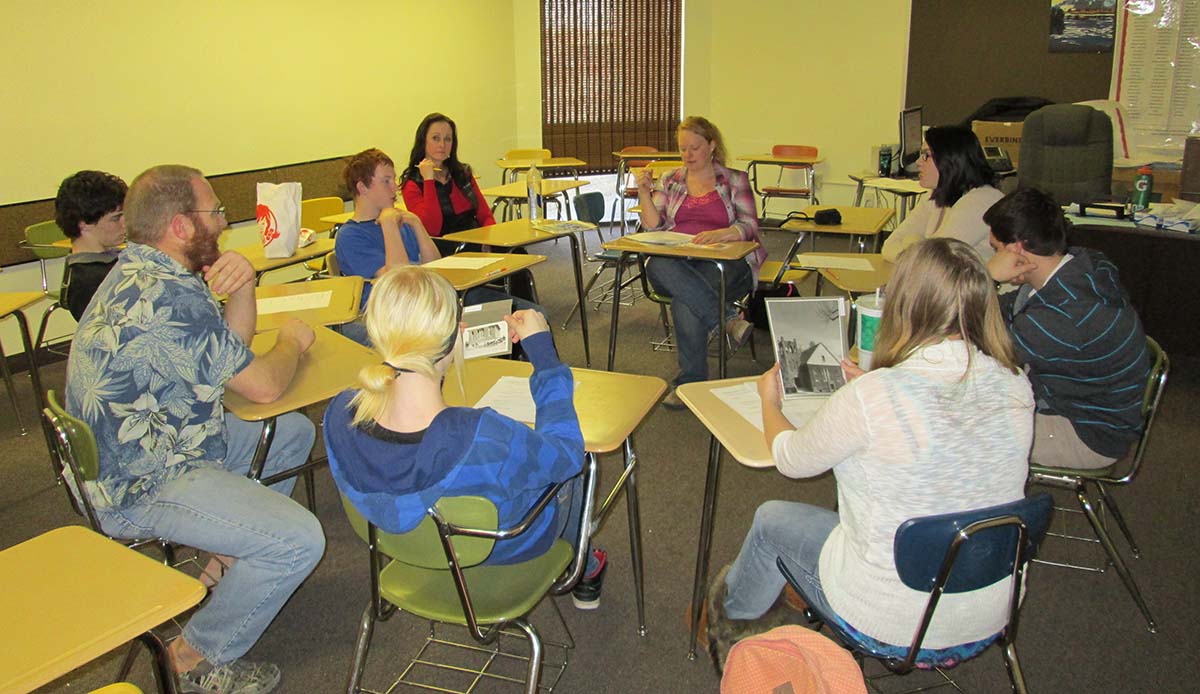
 The Discovery Speaker Series, sponsored by Wyoming Community Bank is your opportunity to have a more in depth look into where we have come from and where we may be going. A very dynamic group of topics are presented, both historic and contemporary themes explored with experts in their respective fields.
Programs
Programs Schedule
The Fremont County Museums located in Dubois, Lander & Riverton offer an outstanding and diversified schedule of programs throughout the year for visitors of all ages. Take a look at the calendar of events and find the Speakers, Treks, Exploration programs and events. We are sure to have something that catches your attention and that will be both educational and entertaining.
Halloween at the Museum
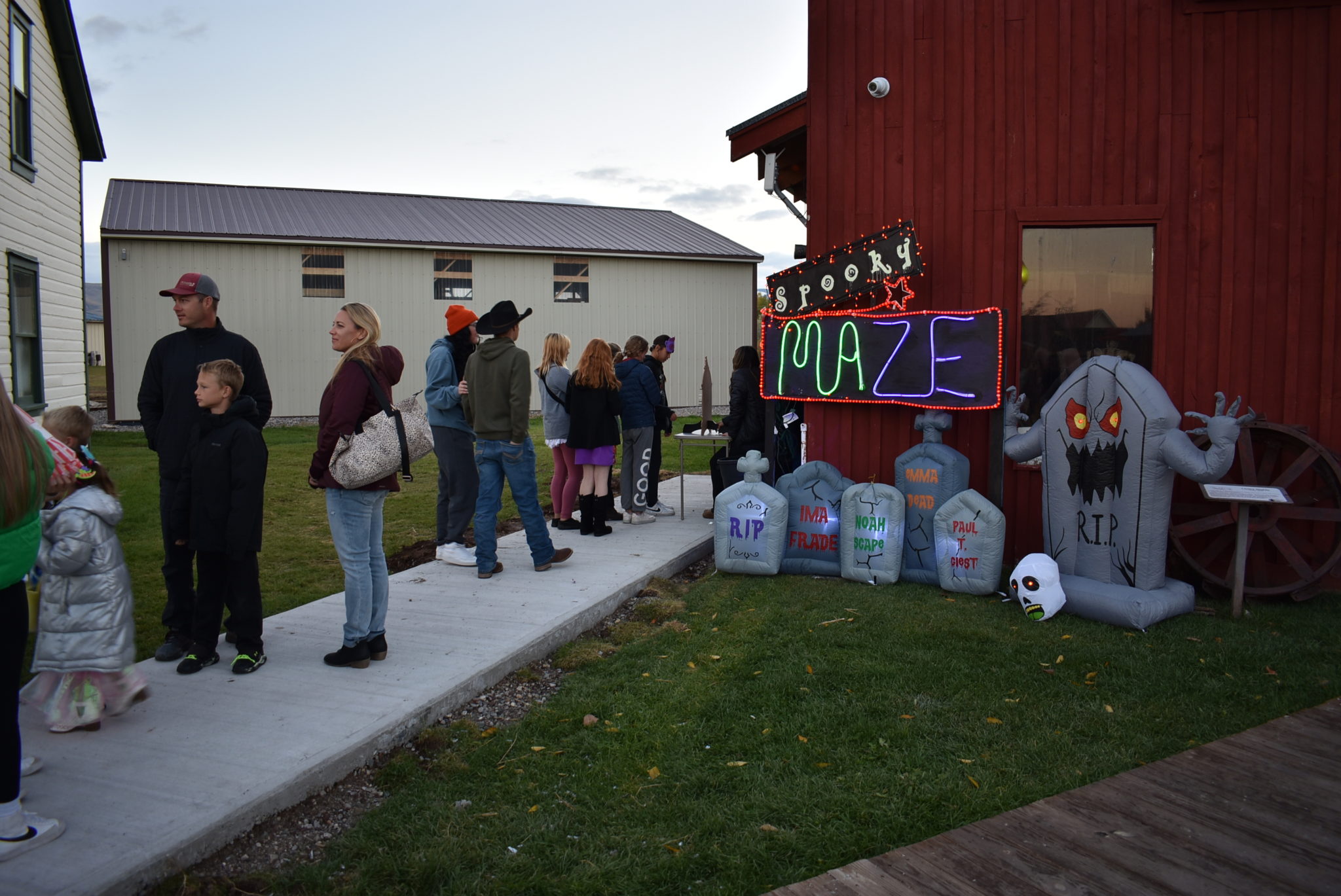
The Dubois Museum, Kiwanis of Dubois, and Friends of the Dubois Museum are ready to have a ghoulishly good time…
October 26, 3-5pm
Christmas Open House
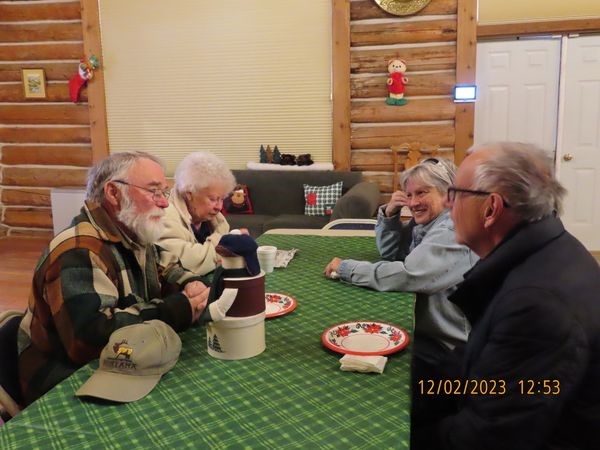
Newly acquired artifacts are a part of must-see new exhibits. If you have not visited the museum since last year’s open house, now is the time!
December 7, 11-2pm
Kids Corner: DIY Christmas Ornament
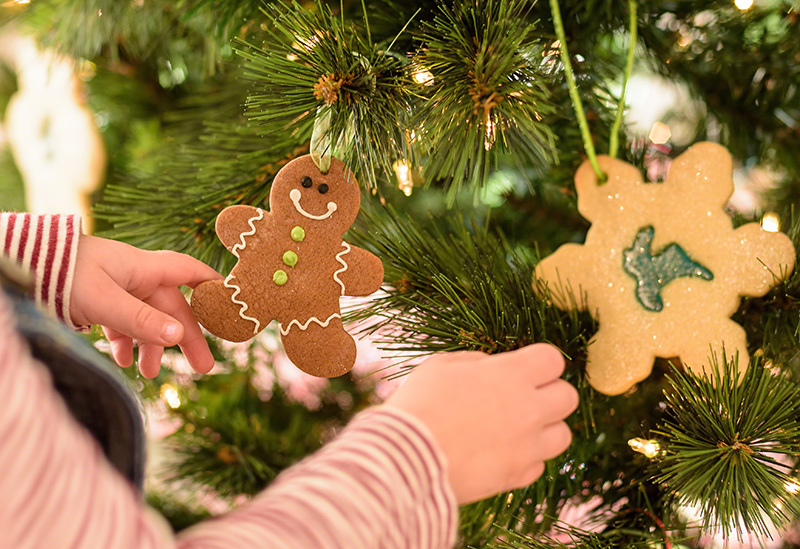
Come learn about how beautiful bulbs became a staple of Christmas decoration and make one yourself!
December 7, 11-2pm
Riverton Walking Tour
Fremont County has a rich history. Beginning in prehistoric times, many have made this area their home - ancient peoples, American Indians, and - through Western Migration - the white man. This tour concerns itself with the settling of the Riverton area by means of its historic buildings.
How You Can Help
How To Support
Annual Giving
Annual gifts of any size are always welcome. Learn more today about how you can give to the Riverton Museum on an annual basis.
Planned Giving
Making a planned gift is quite simple. Learn more today about how you can plan your gift to the Riverton Museum.
Make a Donation
Simply make a one time donation to the Riverton Museum. Every bit helps!
A Special Thanks To Our Sponsors

The Chicago-Northwestern Railroad Depot
110 S. 1st
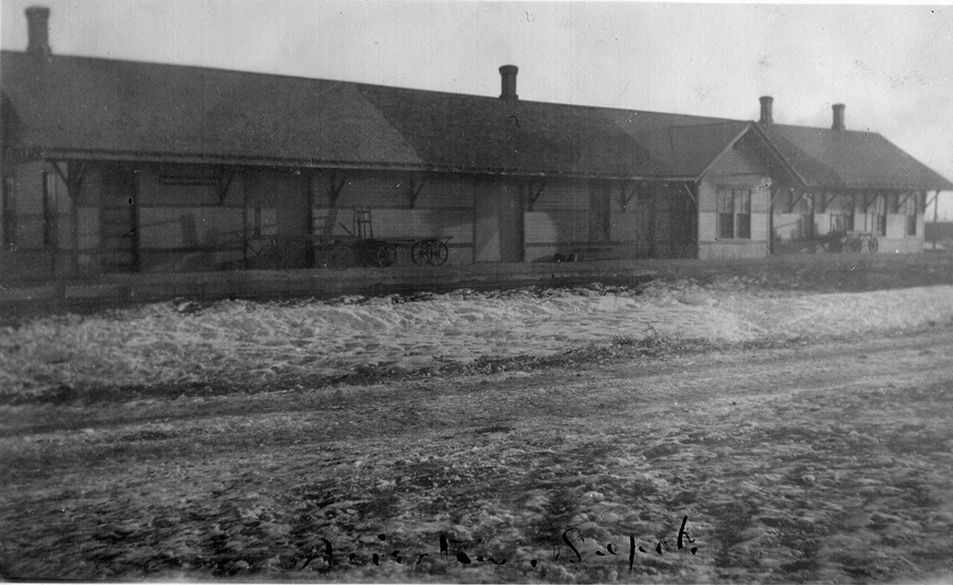
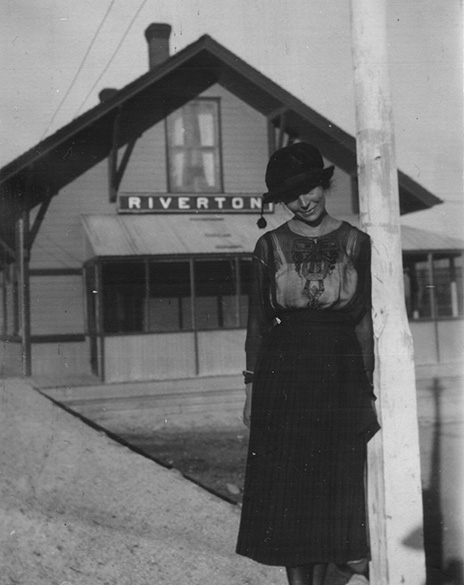
Chicago-Northwestern Railroad Depot- The Depot was originally named ‘Wadsworth’ after Major H. E. Wadsworth as a gesture of appreciation to the Wind River Indian Reservation superintendent by the Chicago & North Western Railroad. However, numerous Riverton townspeople believed that H.E. Wadsworth had worked against their interests and were upset over the sign at the depot, and as a result, during the first week of November 1906, the ‘Wadsworth’ sign was removed and replaced with ‘Riverton.’
The first depot building operated until 1916 when General Manager Walters of the Chicago and Northwestern, of Omaha, arrived in Riverton in August of 1916. Mr. Walters approved a move of the depot building to the south side of Main Street and as well as a modernization. Additionally, cement walks were also built connecting the depot directly to Main Street. The newly remodeled depot building featured separate waiting rooms for men and for women, a ticket and business office, and lighting.
1984 saw a decline in railroad activity. The Chicago & Northwestern began the process of halting their rail service in the area, and by 1988 had completely shut down the rails from Casper in to Riverton despite efforts of the Fremont County Commissioners, Wyoming’s Congressional delegation, and local legislative and governmental officials to keep the lines open. The tracks were eventually removed in the early 1990s as part of the ‘Rails to Trails’ project.
The Riverton Depot remained as a historic building after the rails were closed and was saved from demolition and restored in 1976.
Tidbit:
In 1906, the Riverton Depot was located on the north side of Main Street, on the west side of the tracks. In 1917, the Depot was moved to the south side of Main Street. In order to complete this move, the Depot building was lifted onto a flatbed rail car, taken by rail to Shoshoni where the car could be turned, and transported back to Riverton.
The Lapeyre Hotel
831 N. Federal Blvd.
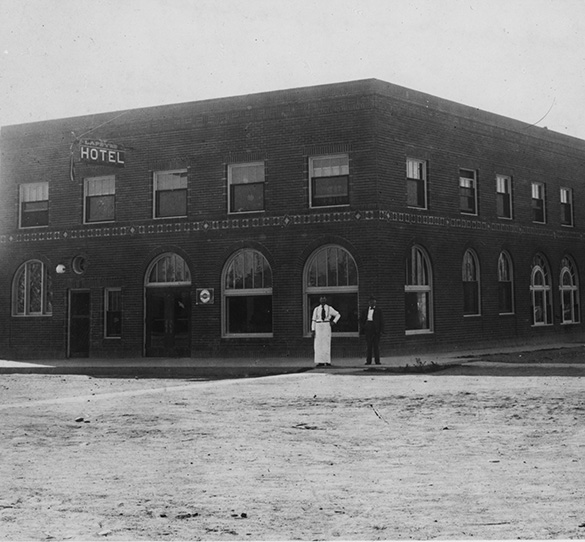
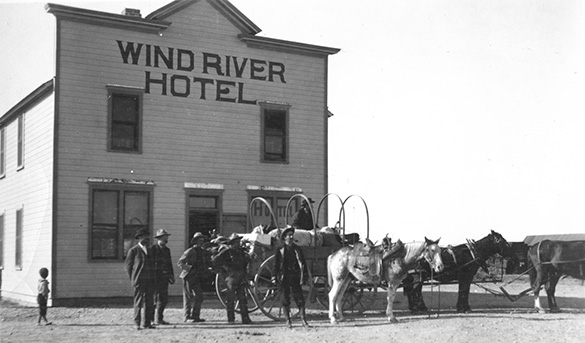
The Lapeyre Hotel – Originally called the Wind River Hotel, the structure was built in 1907 by Ed Luthy and was one of the first hotels in Riverton. In 1910 the hotel was purchased by John Lapeyre Sr. who continued to run it as a hotel and restaurant.
In 1915, the original building was pushed back to make way for a new brick structure- the newer structure is what you see today and the old Wind River Hotel building remained on site until 1976 when it was torn down.
John Lapeyre Sr. ran the hotel in addition to a sheep ranch until his retirement in 1935 and his son, John Lapeyre Jr., took over. Lapeyre Sr. and his wife continued to live at the hotel until his death in 1941 and hers in 1950. The Lapeyre family owned the hotel for 65 years before it was sold in 1978.
Tidbits:
Born and raised in the Alps, John Lapeyre Sr. emigrated from France to Wyoming between 1906 and 1907 after hearing from friends of the wonderful opportunities here.
The Lapeyre Hotel is supposedly haunted on the second floor by a ghost that has been seen looking out the windows.
The Gem Theater
119 South 3rd Street East
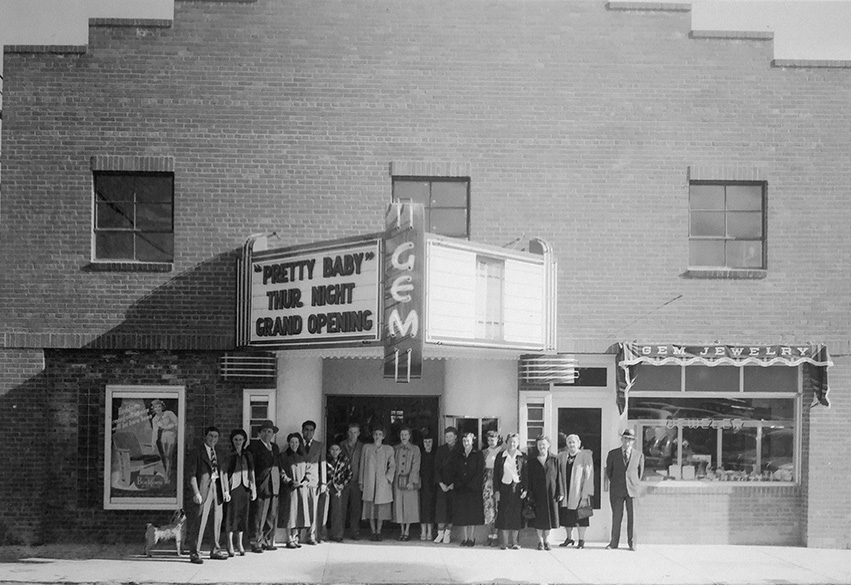
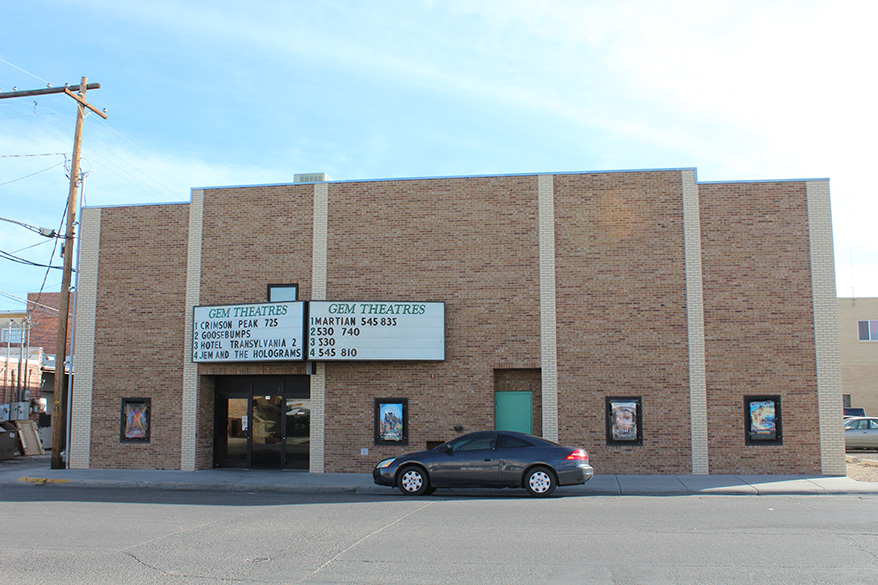
The Gem Theater- The Gem Theater opened on Thanksgiving weekend, 1950. The Gem was a very modern theater for its time and boasted the highest quality in luxury seating, equipment, and design. The first showing included a newsreel, a short, and “Pretty Baby” starring Dennis Morgan & Betsy Drake was the first full length film.
The owners of the Gem, Tom and Winifred Knight, strove to use local labor and supplies in the construction of the theater. It was designed and built by Jack Heppe and Roscoe Butler, with all of the subcontracting done locally. At the end of 2002, the theater closed for 7 months to expand and remodel. Once again keeping the work in the community, ninety percent of the contractors came from Fremont County. The theater reopened in 2003 with more seating and remains open and in use today.
Tidbit:
Tom Knight also owned two other theaters in town: The Knight Drive-in and the Acme Theater. Additionally, Knight served as an aviator, an emergency volunteer, a mason, and as both the Fire Chief and Mayor.
The Tonkin Block
307 East Main Street
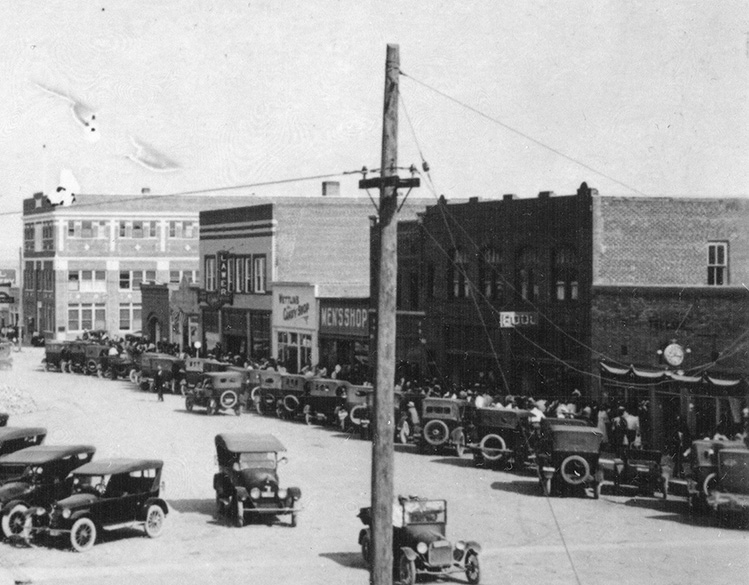
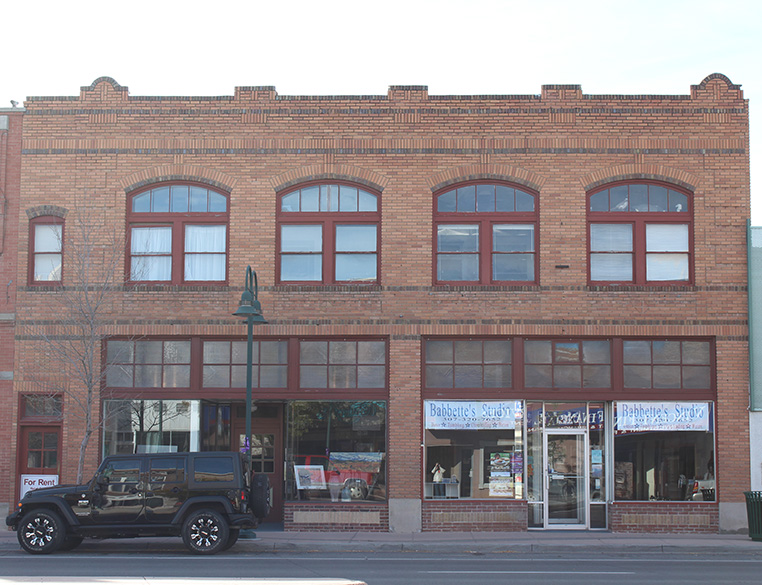
The Tonkin Block – Dr. A.B. Tonkin, the first physician and mayor of Riverton, planned to build a brick drugstore in a partnership with Ira J. Burleson, a pharmacist from Casper, just west of the First State Bank (now First Interstate Bank) to be one of the first business blocks in Riverton.
Construction began on the Tonkin building in August of 1915 with the excavation completed by the 13th of August and the construction finishing between September and November of 1915. The Burleson Drugstore was installed on the street level portion of the building in late 1915, Dr. Tonkin’s office was in the upper portion of the building, and jewelry store owner Joe Evans moved his store in the week before Christmas of 1915.
Tidbit:
In one of Riverton’s newspapers, the Riverton Chronicle, dated September 6, 1917, Tonkin bought out local businessman H.O. Barber’s interest and became the sole owner of the block.
The Acme Theater
312 East Main Street –
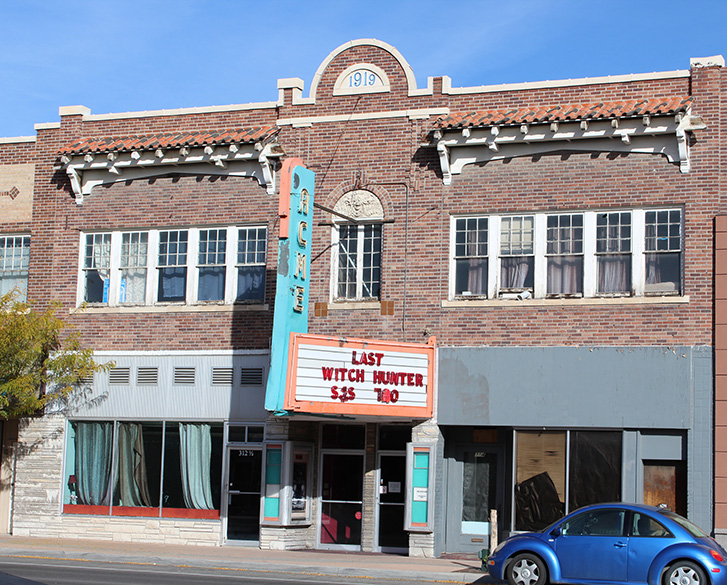
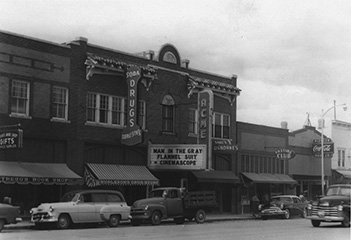
The Acme Theater – The Acme Theater was built in 1920 and was the first theater in Riverton. When it opened, the Acme boasted one of the best Photoplayers in America. Also known as “One Man Orchestras,” Photoplayers include a piano and pipe organ, as well as audio reproductions of a violin and drums all playable from a keyboard. The Photoplayers were used to enhance the experience of theater goers during silent films before sound films, or “Talkies,” were made available for public viewing. The first “Talkie” shown at the Acme was “The Broadway Melody” starring Charles King, Anita Page, and Bessie Love and opened at the theater on June 9th, 1929.
The theater went through a remodel in 1936 completely changing the interior with new paint, lighting, seating, curtains, and rugs. In 1952, Mr. Tom Knight introduced the town of Riverton to its first 3D movie.
Tidbits:
In April of 1931, you could go to the movies for less than a dollar; tickets ranged from 10¢ – 50¢ depending on showtime and age.
The Acme Theater is supposedly haunted; while sitting in the theater you can often hear popcorn crunching under feet, even when the building is empty. The Acme has even been the subject of investigations by the Riverton Wild West Paranormal Society.
The Delfelder House
222 South Broadway
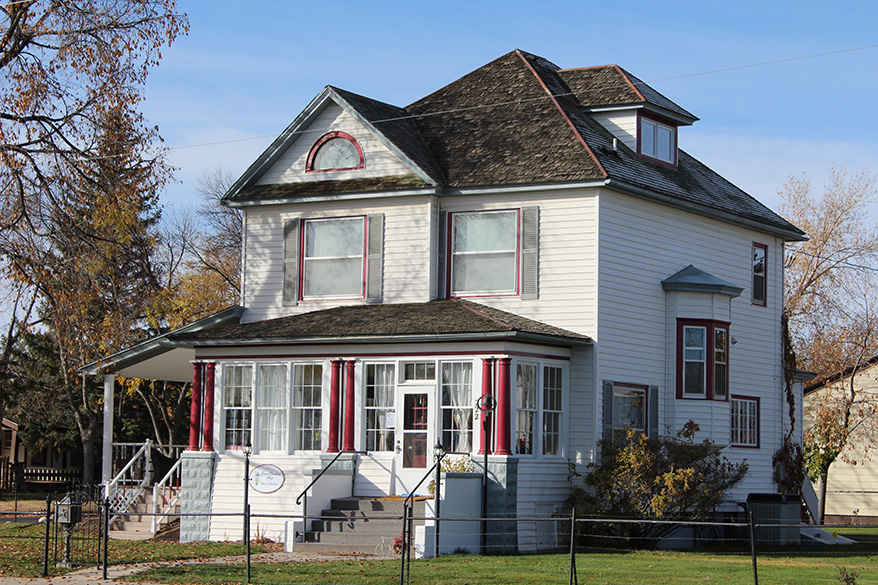
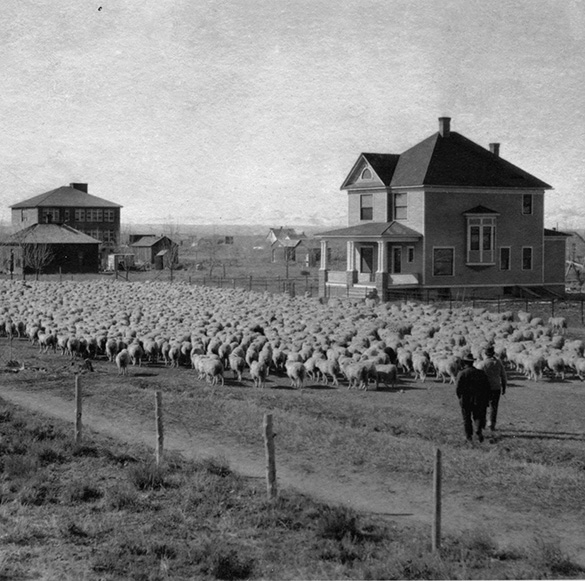
The Defelder House – The three-story Victorian house was built in 1907 by J. W. Blake, a local sheep rancher and banker, shortly after the founding of Riverton. After Mr. Blake died due to complications from a horse riding accident, Mrs. Blake sold the home to J. A. Delfelder in 1913.
J.A. Delfelder was an influential man whom was known as “Wyoming’s Sheep King”. Within months of moving to Riverton, Delfelder he was voted mayor of the town. He held this position until a month before his death in 1921. After the death of her husband, Mrs. Delfelder continued to live in the home until she sold it to Jack Ratliff and his family in 1960. The Ratliff’s had four children who grew up in the home for the next 30 years. In 1991, after all of the children moved out, the Ratliff’s decided to sell the home to move into a smaller home.
In the summer of 2000, the House was purchased by two local businesswomen who restored the house and opened the Delfelder Inn Bed and Breakfast. It continues to operate as a bed and breakfast to this day.
Tidbits:
When the home was built in 1907, it had no running water, electricity, or natural gas. These amenities weren’t added until later years: running water was added between 1910 and 1912, electricity in 1914, and natural gas in 1921.
The Delfelder’s were well known for entertaining the people of Riverton with lavish parties. Many locals have fond memories of their parents dressing formally for affairs held in the Delfelder home.
The Masonic Temple Building
401 East Main Street
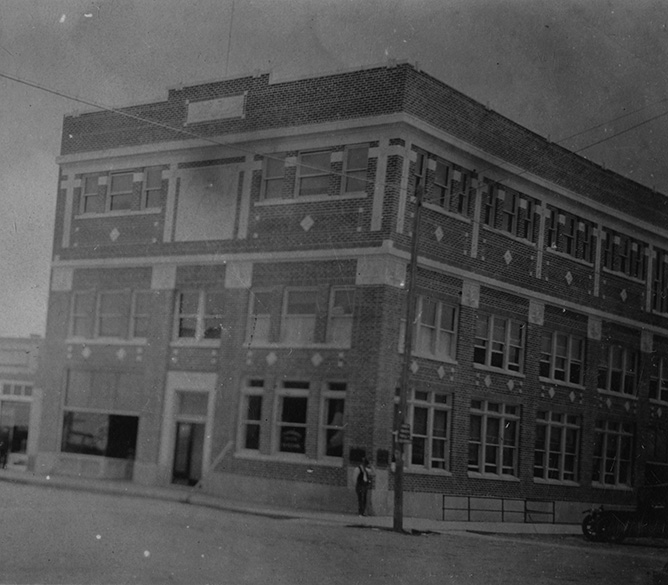
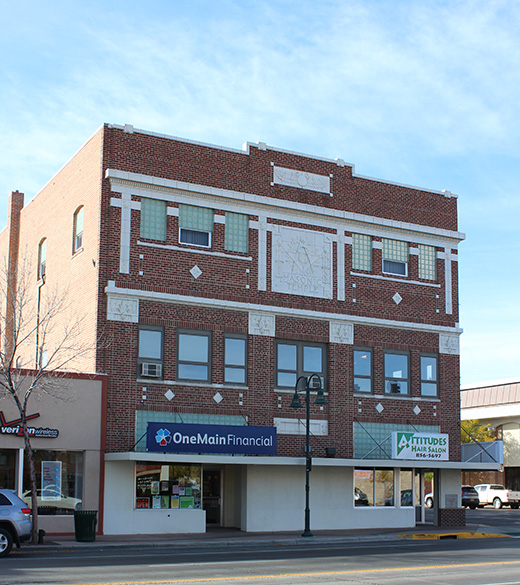
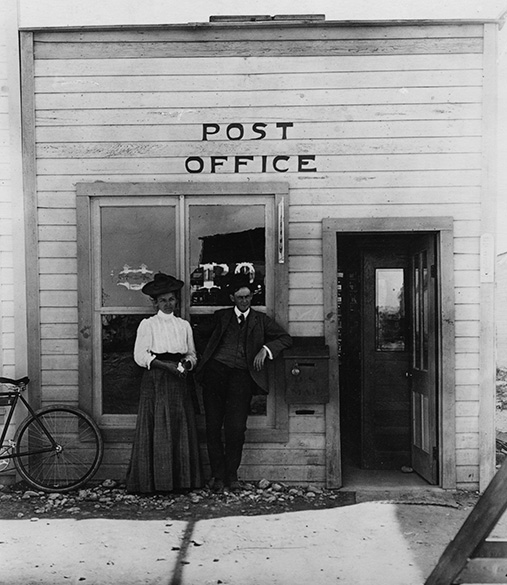
The Masonic Temple Building – Lodge No. 26 A.F. & A.M. was instituted December 20, 1907 and chartered September 2, 1908.
The block in which the Temple building was located was called ‘Mooney Block’ because in August 1906, William Mooney patrolled the lots at 4th and Main with gun in hand to keep invaders from Lander from appropriating his lots. Ground was broken for the building of the Temple in July 1917, the building was opened March 1, 1919, and the Grand Lodge laid the cornerstone on March 23, 1918.
The entire top floor of the building was used as a lodge room, the second floor was divided into office suites, the ground floor housed the Farmers State Bank of Riverton, a post office department, and public corridors, and the basement held the Masonic Club Rooms, and the barber shop.
Tidbit:
The lodge first met in a one room cabin below the hill on South Federal Avenue.
The U.S. Post Office
501 East Main Street
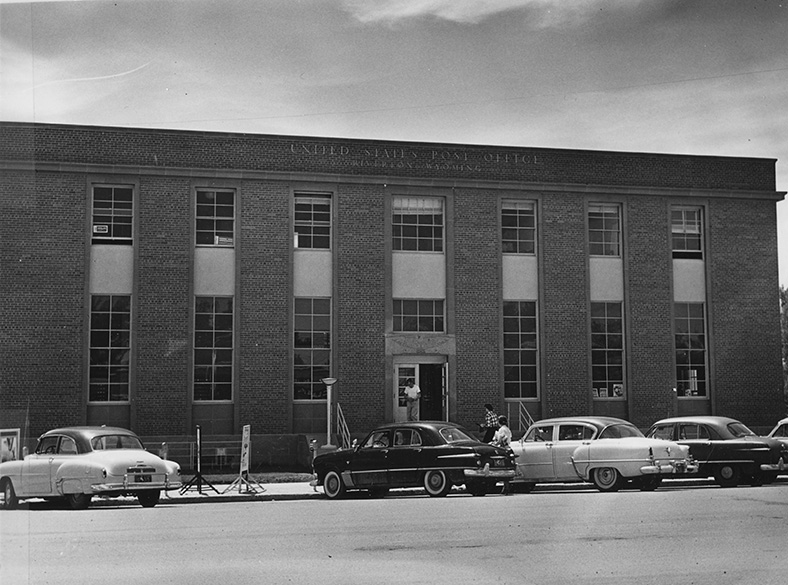
The U.S. Post Office – Construction on the Riverton Post Office began in 1940 and was completed in 1941.
The site for the Riverton Post Office was selected by the Post Office and Treasury Department committees. Work began in 1938 but was halted in December 1938 due to a lack of funding from Washington, D.C. and Riverton had to wait for more funding to become available. In January of 1940 bids were finally opened up in Washington, D.C. for contractors. The Jensen Construction Company won the bid for construction of the Riverton Post Office because they submitted the lowest bid of $94,789.00. The Jensen Construction Company also agreed to finish the structure within 300 days from the authorized date to proceed.
Materials used for the construction came from the state of Wyoming and Riverton as much as possible: A.L. Benshoof Company provided the plumbing, F. M. Hoffman provided the wiring, and M.J. Gilpatrick excavated the basement. General engineer inspectors from Kansas City, Missouri arrived in Riverton to give the final inspection of the new building on February 12th, 1941 and gave their approval.
Tidbit:
The Riverton Post Office was a recovery project implemented by President Roosevelt and the New Deal Act. The New Deal put people back to work and completed projects that would have an enduring contribution to the United States and the Nation.
The Methodist Church
700 East Park Street
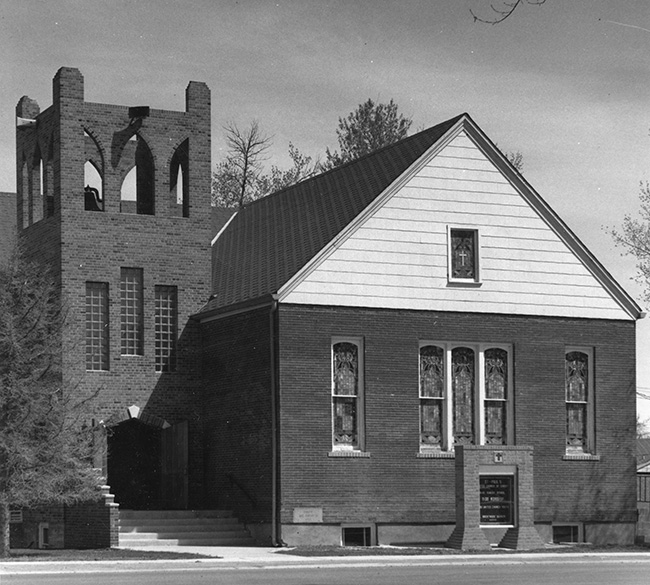
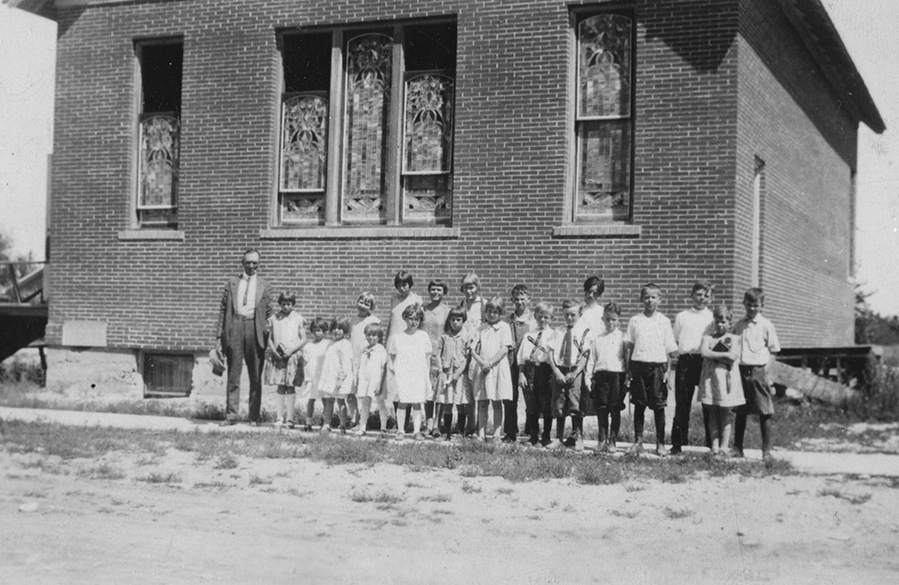
The Methodist Church – The first Methodist services in Riverton were held in 1907 by Rev. William L. Carter, who was the Lander Methodist pastor, who made frequent missionary trips to the new town of Riverton. Rev. Carter was succeeded by Rev. Gillespie, whose efforts made it possible to acquire the property for the Church building. The Methodist Church’s cornerstone was placed on September 27th, 1915 and the first service was held on April 29th, 1917.
The original building looked much different than the building you see today due to major remodeling done from 1950-1952 including additions of the tower on the left hand side of the building and a porch on the side entrance. However, due to a growing congregation, the church leaders and congregation decided to sell the building in 1959. On December 27th, 1960, St. Paul’s United Church of Christ purchased the property and kept it for eight years.
The Riverton Museum Committee was approached with the idea of using the building for a museum and the building was purchased including most of the contents intact. Changes were made to the building to make it more accessible to the public and the Museum opened its doors for the first time in August of 1970.
Tidbit:
In September of 2015, the stained glass window at the top of the front of the building was removed and given to the Methodist church for their 100 year celebration.