
About us
The Fremont County Pioneer Museum in Lander collects, preserves and interprets artifacts from prehistory through the 1920’s. The focus of the collection is on artifacts from the Lander Valley, Fremont County and western Wyoming.
Regular Programs
Programs
Children's Exploration Series
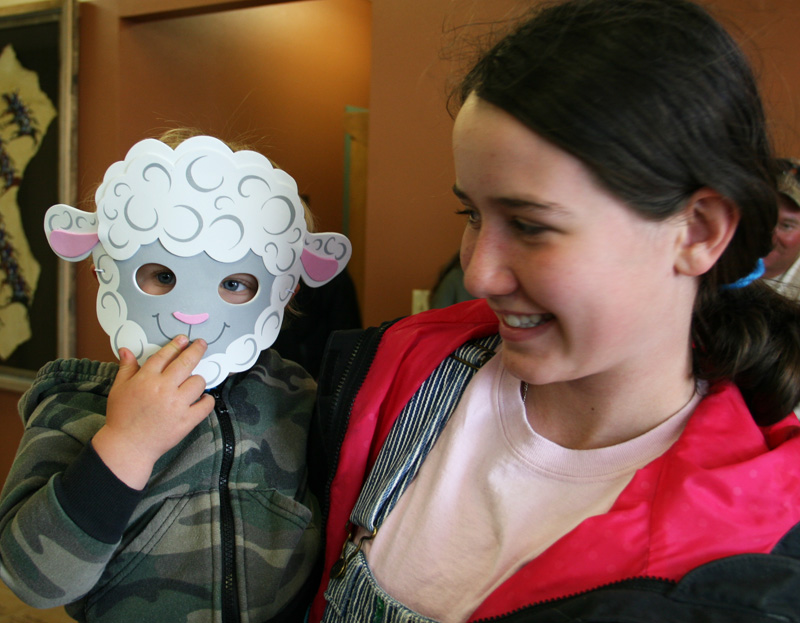
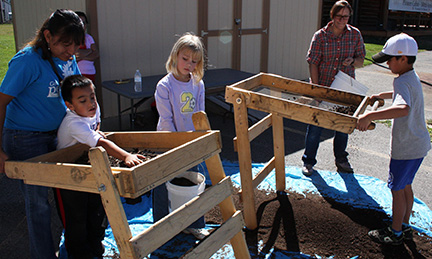
The Children’s Exploration Series, provide children with  hands-on learning experiences that focus on cultural history and our natural environment. Geology, Archaeology, Native American culture, agriculture and pioneer history are the focus of the programs that children love to participate in.
Adventure Treks
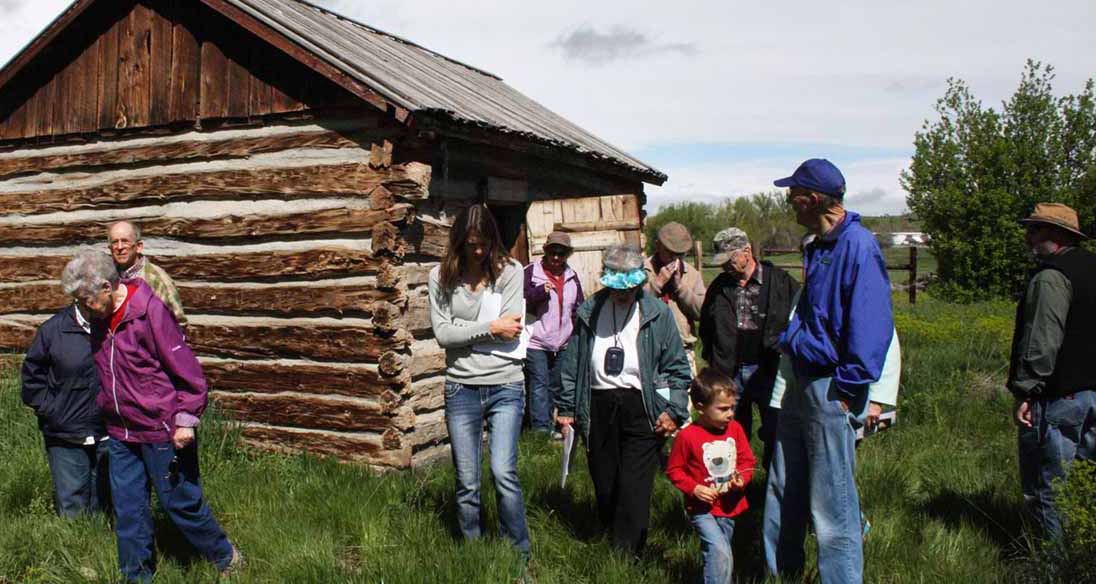
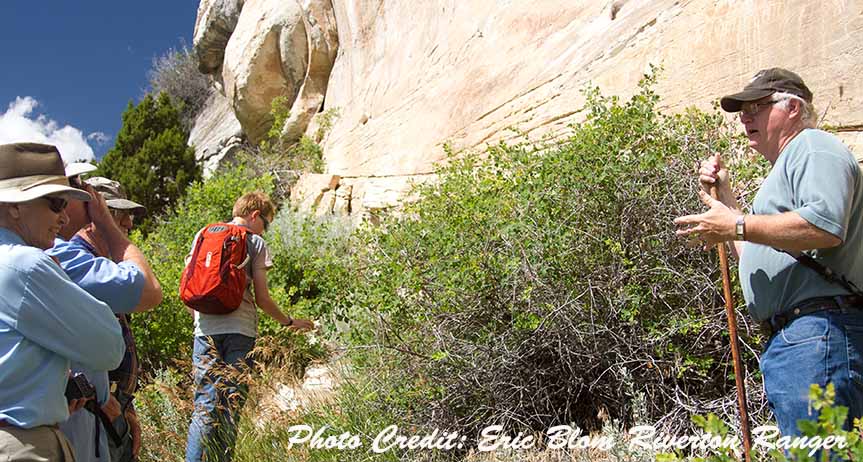
 The Adventure Trek Series, sponsored by the Wind River Visitor’s Council is your opportunity to get into the country to explore, experience and walk in the footsteps of the rugged and independent people who discovered and settled the extraordinary Wind River region.
Discovery Speakers
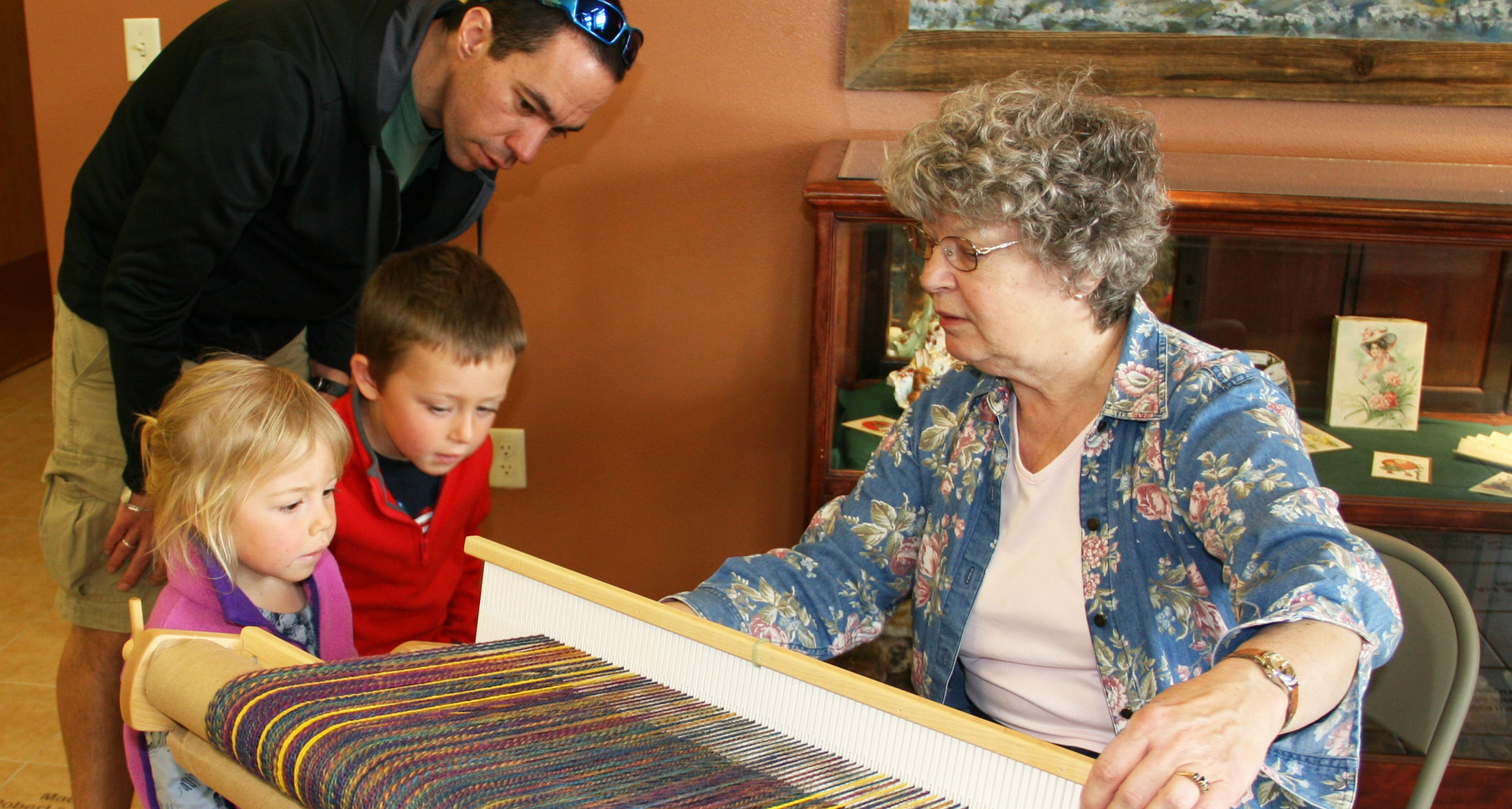
 The Discovery Speaker Series, sponsored by Wyoming Community Bank is your opportunity to have a more in depth look into where we have come from and where we may be going. A very dynamic group of topics are presented, both historic and contemporary themes explored with experts in their respective fields.
Programs
Programs Schedule
The Fremont County Museums located in Dubois, Lander & Riverton offer an outstanding and diversified schedule of programs throughout the year for visitors of all ages. Take a look at the calendar of events and find the Speakers, Treks, Exploration programs and events. We are sure to have something that catches your attention and that will be both educational and entertaining.
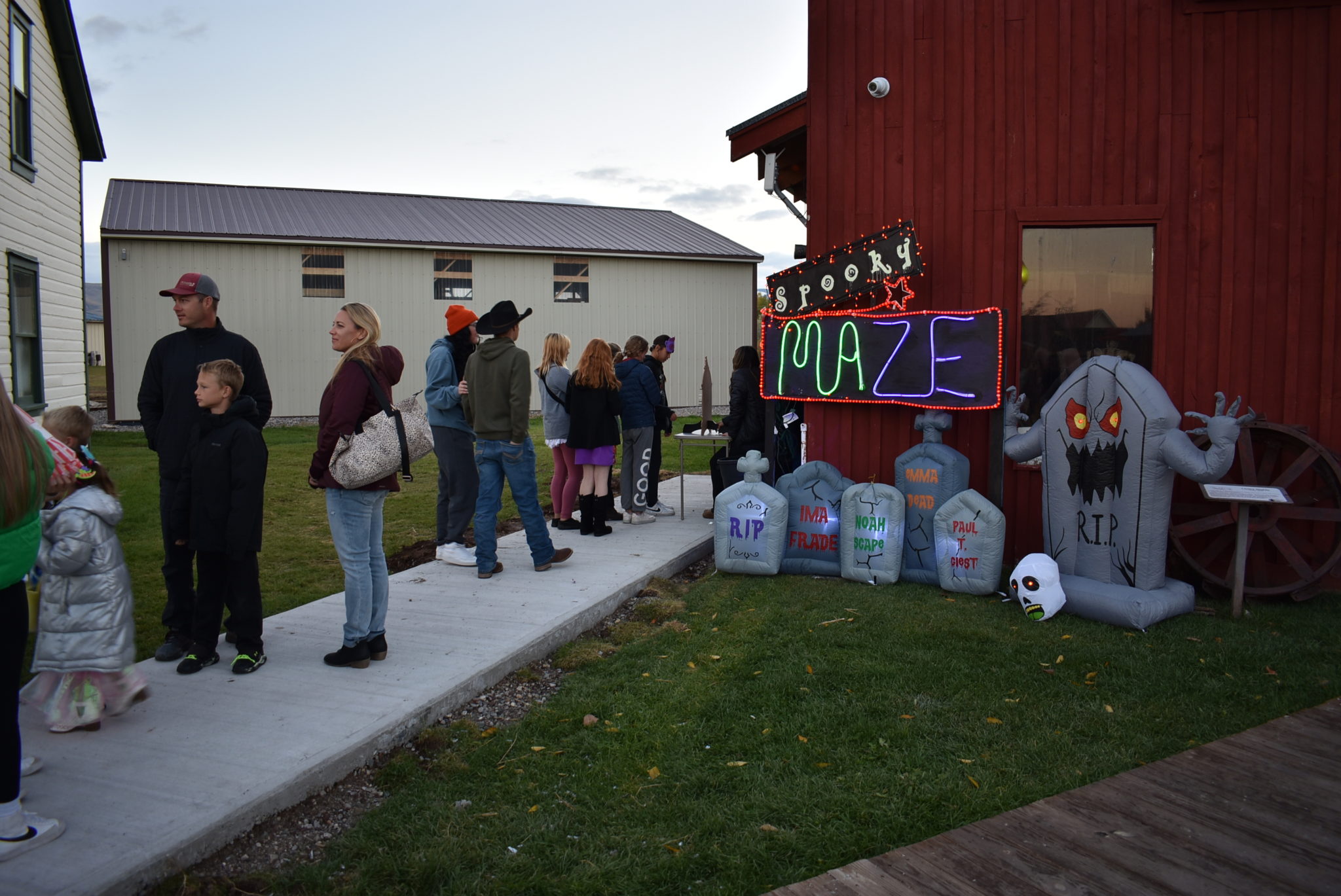
Halloween at the Museum
The Dubois Museum, Kiwanis of Dubois, and Friends of the Dubois Museum are ready to have a ghoulishly good time…
October 26, 3-5pm
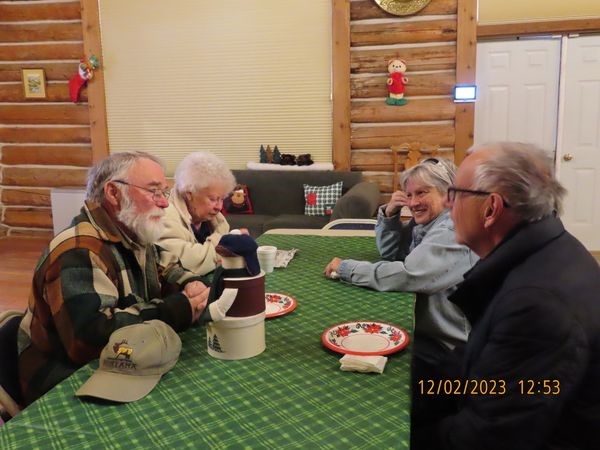
Christmas Open House
Newly acquired artifacts are a part of must-see new exhibits. If you have not visited the museum since last year’s open house, now is the time!
December 7, 11-2pm

Kids Corner: DIY Christmas Ornament
Come learn about how beautiful bulbs became a staple of Christmas decoration and make one yourself!
December 7, 11-2pm
Lander Walking Tour
Fremont County has a rich history. Beginning in prehistoric times, many have made this area their home - ancient peoples, American Indians, and - through Western Migration - the white man. This tour concerns itself with the settling of the Lander area by means of its historic buildings.
1.) Lander’s Mill
2.) The IOOF Building
3.) The Lander Hotel
4.) The Bossert Building
5.) The Fremont Hotel
6.) The Noble Hotel
7.) The Carnegie Library
8.) The Fremont County Courthouse
9.) The M.N. Baldwin Company
10.) The Amoretti Bank
11.) The two-story Noble and Lane Building
12.) The Federal Building and Post Office
13.) Rhein’s Hardware & Sheet Metal Store
14.) Lander Eagle Newspaper
15.) Union Market
16.) Vaughn’s Livery Stable
17.) Coalter Hotel
18.) Lander Brewing Company & Rhodes & Gilbert Taxidermy
19.) City Drug Store
20.) Lander Mill Grain Tower
21.) Orchard Building
22.) Woodruff Mercantile
23.) Wind River Mountaineer
24.) Adams-Heron Building
25.) Scott Cheverolet
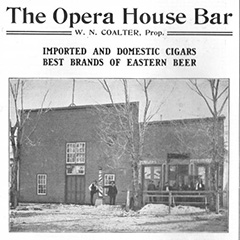
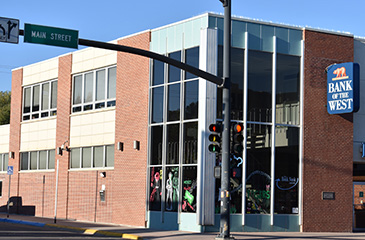
26.) Coalter’s Opera House & Bar
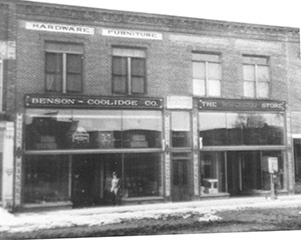
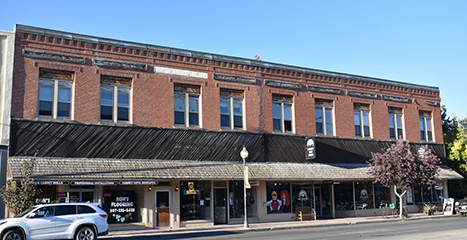
27.) Coolidge Building
28.) Lander Mercantile
29.) Camp Auger
How You Can Help
How To Support
Annual Giving
Annual gifts of any size are always welcome. Learn more today about how you can give to the Lander Museum on an annual basis.
Planned Giving
Making a planned gift is quite simple. Learn more today about how you can plan your gift to the Lander Museum.
Make a Donation
Simply make a one time donation to the Lander Museum. Every bit helps!
A Special Thanks To Our Sponsors


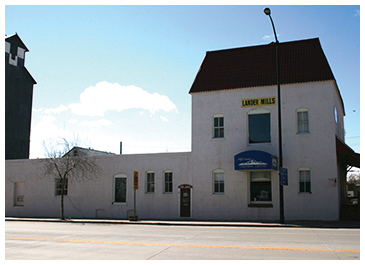
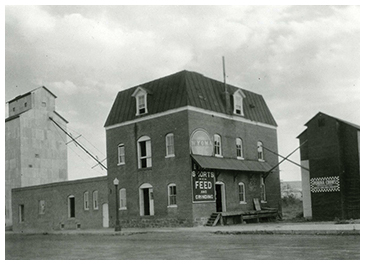
Lander’s Mill
129 Main Street
Lander’s Mill -By 1887-88 the farmers were pushing for a local flour mill and went as far as putting up some of their own money to entice someone to take on the project. At that time, wheat was grown in abundance but little was sold except as chicken feed. J. D. Woodruff took up the offer, invested some of his own money, and soon had a mill up and running— and producing flour.
Prior to the mill, flour was freighted from Rawlins, bore a tariff, and took two weeks to reach Lander. The first source of power for milling was water. A wooden flume carried water to the wheel, but the water would freeze in the winter. Powered by oil-fired boilers, the mill was converted from water power to steam. This “power” was soon harnessed and provided electricity to the town. Power was only available to the town at night, as the power was used during the day by the Mill. Exceptions were made on Tuesdays and Fridays when the mill left the power on for “ironing days.”
Tidbits:
- Lander was the second town in the state to have electrical power.
- In 1927 the large elevator was built to the east of the mill to store excess wheat.
- In 1928 Lander Mill became the first “franchised” dealer of Purina Chows livestock feed in the State of Wyoming.
- In 1944 the mill discontinued the manufacturing of flour (due to not enough grain being brought to the mill by farmers).
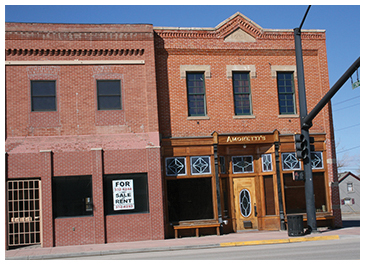
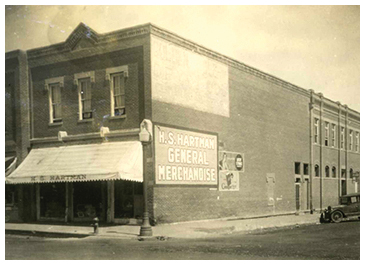
The IOOF Building
202 Main Street
The IOOF Building – International Order of Odd Fellows -In 1886, the social society, the International Order of Odd Fellows, funded the construction of this brick building. The Odd Fellows held their meeting upstairs which was reported as handsomely furnished, and was supplied with “electric lighting appliances.”
The society originated in England in the 1700s; some say as an offshoot of Free Masonry. It came to America in the early 1800’s. The society’s symbol or emblem is the chain with three links, meaning friendship, love, and truth. Odd Fellows are also known as “The Three Link Fraternity.” On the peak of this building, the date 1886 is visible along with the three links.
One of the earliest businesses to use the ground floor was James I. Patten’s drug store. In 1887 the Fremont Clipper newspaper reported the owner carried “an immense stock of drugs, toilet articles and druggist sundries.” “An efficient pharmacist is at all times found in attendance and prescriptions carefully compounded.”
Over the years the building has housed a saloon, the Golden Rule Store, an upstairs bowling alley, the Stockgrowers’ Bar and Several Restaurants.
The Lander Hotel
250 Main Street
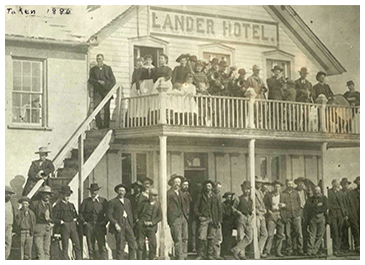
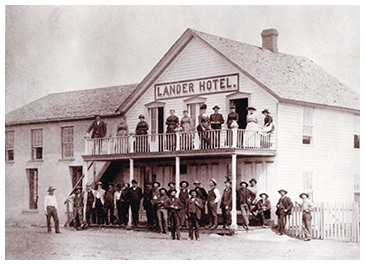
The Lander Hotel -The Lander Hotel was one of the first businesses on Lander’s dusty Main Street. It began as an eating place and stopover for bull-team freighters on their way to Fort Washakie. It was a one-story, four-room log building built by Ben Decora. Later additions were built of adobe and wood.
Captain H. G. Nickerson bought the hotel in 1885 or 1886. Behind the hotel (to the north) was a livery stable and barn which Nickerson ran in conjunction to the hotel for the convenience of his guests. The Fremont Clipper newspaper reported it as a “popular hostelry with large airy rooms, nice clean beds and the tables always supplied with the best market affordable.”
The hotel register shows that Owen Wister, author of the popular book, The Virginian, spent a night or two in the hotel in July, 1887. Wister was a lawyer from Philadelphia who became one of the first writers of western novels.
The “coming of the railroad” was an influence and part of the lower floor was remodeled into a restaurant.
In 1928 the hotel was torn down to make way for the present Grand Theater.
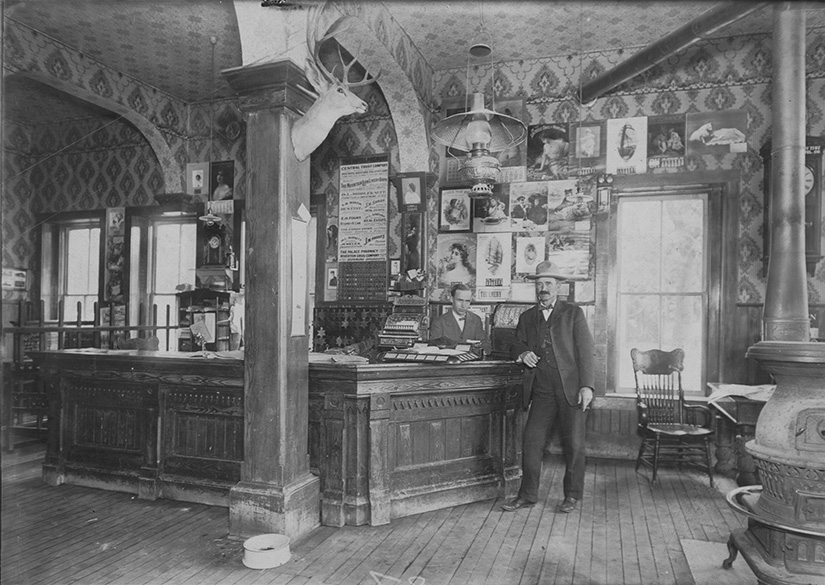
The Bossert Building
259 Main Street
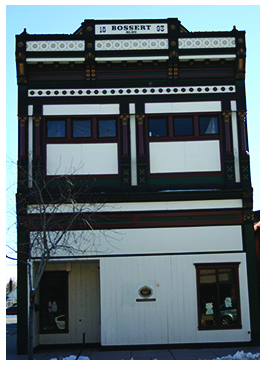
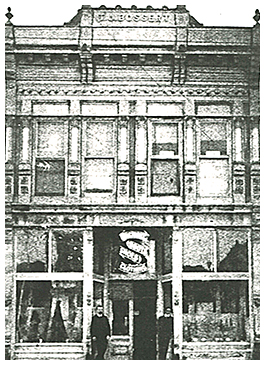
The Bossert Building – This unique ornate building has been on Lander’s Main Street since 1893. Built by Thomas J. Bossert and it was used for his dry good store. He ran it as a “cash only” store. He advertised clothing at lower prices than ever offered in Lander. He ran competitive ads in the newspaper “prices goods elsewhere then call on Mrs. T. J. Bossert and you will be surprised at her low prices.” This was when shoes were selling for $2.00 and fine imported dishes were 25 cents. In 1905, Thomas Bossert decided to get out of the mercantile business and H. W. Houghton & Company took over.
Through the years, the building has been used by a furniture store, remodeled for a movie theater, a Piggly-Wiggly grocery store, a pool hall, a saddlery, a newspaper office, restaurants, and a bakery.
The Fremont Hotel
285 Main Street
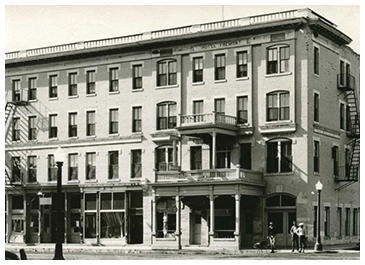
The Fremont Hotel – The Fremont served guests for eighty years on the corner of Main and 3rd, from 1891 to 1971. Jerry Sheehan had the foresight to build an out-of- the ordinary hotel in an isolated western town. Mr. Sheehan was no stranger to the hotel business. Prior to opening the Fremont Hotel he was the proprietor of The Bridge Hotel. The Fremont started out as two-story- structure with a lobby, office, dining room, and billiard hall on the first floor. On the second floor was a parlor, with a balcony opening from it, two suites and thirteen single rooms.
With the coming of the railroad, in 1906 two more stories were added, making it the first four-story building in Wyoming. The hotel was a well-known landmark to travelers who “took a room” at the hotel. As well, many of the town’s events took place at the hotel.
On a cold and snowy Wednesday February 3, 1971, the worst fire in Lander’s history occurred when the historic Fremont Hotel was completely destroyed. At the time there were about 30 guests registered at the hotel. All but one guest survived.
The Noble Hotel
292 Main Street
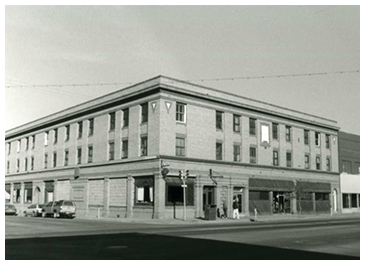
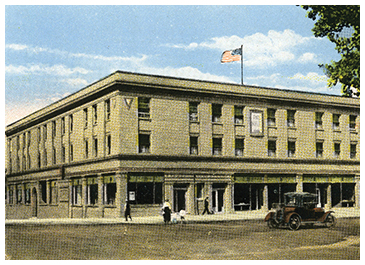
The Noble Hotel -The Noble Hotel has been a landmark in downtown Lander since it was built in 1918. The grand hotel was built to serve visitors from the East on their way to Yellowstone. Harold Del Monte bought the hotel in 1929 and set out to recreate the Noble as more than a luxury hotel. Del Monte was an avid historian, and he wanted the rooms to “give a brief but true synopsis of some of the exciting events of the early west, as they influenced the town of Lander, Wyoming, and the surrounding Wind River Country.” All of Del Monte’s stories were told through images on the Noble’s furniture. Ten of the hotel’s 57 rooms had western themes, including the Pony Express, Sacagawea and Lewis and Clark, the Mountain Man era, Cattle drives and others.
Del Monte commissioned Paul Hindman of Cody to create the western look furniture. Hindman worked for Thomas Molesworth of Cody, who is widely credited with perfecting the western look. Hindman, a master furniture maker in his own right, created the heavy beds, chairs, tables and desks from magnolia wood, and painter J.K. Ralston painted the scenes.
Del Monte transformed the Noble’s dining room as well, arraying it with Indian crafts including a complete teepee by the door. He commissioned J. K. Ralston to paint the history of Shoshone Chief Washakie. Along with the split cowhide covered furniture, the hand woven rugs and curtains in the rooms, the grand fireplace, mounted big game heads and stained glass skylight, the Noble also housed an extensive arrowhead collection and a huge aquarium with trout.
In 1945 Nancy Mansell O’Neill wrote, “Outside the Noble Hotel looks like an ordinary small town hotel. As you step inside you are immediately in the spacious living room of a motion picture mountain lodge.”
The hotel closed in 1969. New tourism trends, changing tastes and easier access to Yellowstone doomed the hotel. In 1975 the National Outdoor Leadership School moved into the then abandoned hotel. Today it is a vibrant hub of activity for the school. NOLS has refurbished the building, keeping many of the original features including some of the Hindman furniture, the stained glass skylight and fireplace. The Tap Tapley Gallery, a small museum inside the Noble, details the history of Del Monte, the hotel and NOLS.
The Carnegie Library
451 North 2nd Street
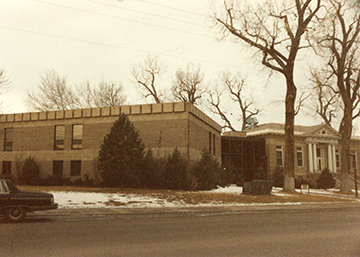
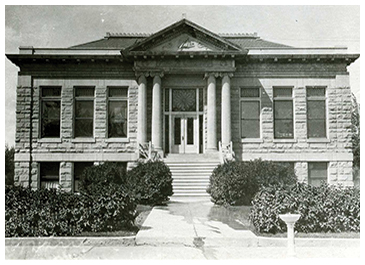
The Carnegie Library -The building of Lander’s beautiful public library was put into motion when Andrew Carnegie gave money to towns to build public libraries.
In 1901 Carnegie, at the age of 66, was known as the world’s richest man. Andrew Carnegie’s life was a true “rags to riches” story. Born to a poor Scottish family that immigrated to the United States, Carnegie became a powerful businessman and a leading force in the American steel industry.
Lander banker, S. Conant Parks, was appointed by the Mayor to apply to Mr. Carnegie for the $15,000.00 grant funds for a public library. However, the money for the building was the first step. There was a requirement for the county to commit public funds for the support of a library. And, land needed to be acquired to build upon. A generous donation of land came from Eugene Amoretti, Sr. and his business partner S. Conant Parks.
The formal groundbreaking for the library took place on August 1, 1907. The library was not completed until 1908. Adam Griesmer was hired as the architect. Some of the design elements in the interior of the building consisted of a metal ceiling on the main floor to be painted to match the plastered walls. There was a reference room, librarian’s room, stack room, and an assembly hall. The reading area of the library was arranged around a fireplace. Books were not loaned out until 1910– up until then users made themselves comfortable and settled in to read.
More expensive materials and construction methods were used on the main floor while the plans for the lower level were more conservative. Previous librarians have said that one librarian lived in the basement. She loved cats and kept several in her downstairs apartment. But the result was unpleasant as the basement began to smell and offended those who met in a room known as the Ladies Assembly Hall. After the librarian left her job, the apartment was never again offered as part of an employee’s benefits.
The Fremont County Courthouse
450 North 2nd Street
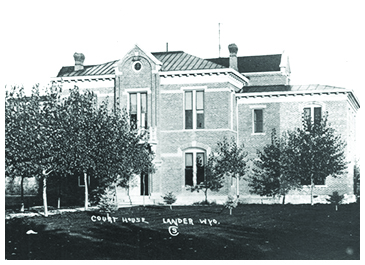
The Fremont County Courthouse – The first permanent county courthouse was built in 1886 (completed in February 1887), four years before Wyoming became a state at a cost of $25,235. The land for the courthouse was donated by Eugene Amoretti, Sr. Offices were on the first floor and a courtroom was on the second floor. Through the years, additions were built to keep pace with the country’s growth.
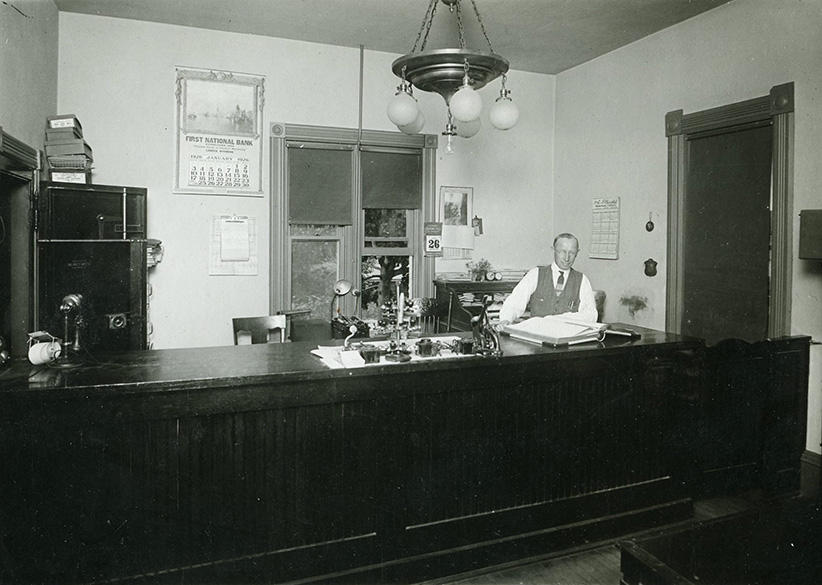
Arthur M. Sparhawk, was the first Sheriff to have his office and living quarters in the jail section of the courthouse. In 1887 Fremont County included portions of Sublette County, Hot Springs County, Washakie County and all of Big Horn and Park counties. This was a huge area for the sheriff and a couple of deputies to cover. Sparkhawk took his job seriously and placed an ad in the newspaper, “Boys, if you would save trouble take off those ugly shooting irons when in town. Sheriff Sparhawk has given you timely notice and he means business.”
The newer version of the courthouse you see today was opened in 1956, and the original structure was demolished after the move to the new building was complete. The original courthouse stood in The green space where the cannon is located today.
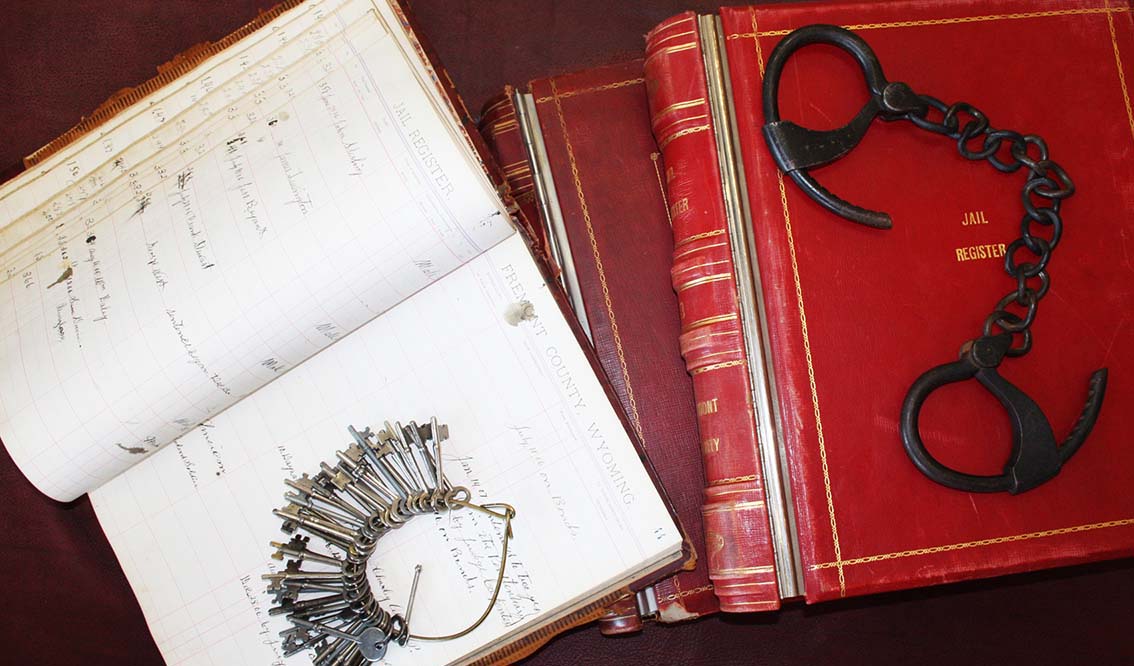
Fremont County’s first courthouse was also the county jail and was, for a short time, home to the infamous Butch Cassidy. It was in this very courthouse in 1894, Butch was jailed, tried and convicted of knowingly purchasing a stolen horse. Fremont County Sheriff Charlie Stough escorted Butch to Laramie, WY to serve out his sentence at the State Prison.
From the early 1950’s through the early 1980’s the Fremont County Sheriff lived in an apartment (now the Fremont County Attorney’s office) attached to the jail. Quite an adventure for a child of one Sheriff who remembers hearing inmates banging on cells hollering for cigarettes, inmates of the jail tending a strawberry patch outside of the apartment and sitting with the dispatchers listening to calls and keeping her own little call log.
One Sheriff remembers several occasions when an intoxicated person, looking to turn themselves in for a place to sleep, would walk into the living room of the Sheriff’s apartment and ask, “is this the jail” while he was watching TV when they forgot to lock the apartment door for the evening.
The M.N. Baldwin Company
300 Main Street
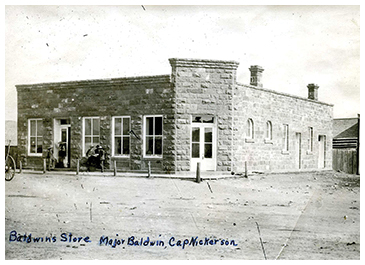
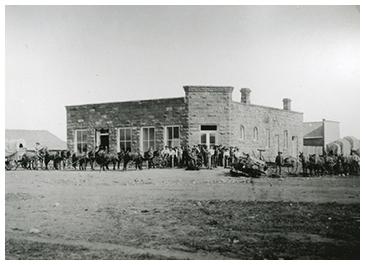
The M.N. Baldwin Company -Major Noyes Baldwin and his wife, Josephine Wright Baldwin, were some of the earliest settlers in the Lander Valley. Before establishing the dry good store in Lander, he had a trading post near Hudson, Wyoming, a log trading post on Baldwin Creek, and a store in South Pass.
The original 1884 store was built of native stone and stocked just about anything that pioneer family would need. The native stone can still be seen on the back portion of the building facing Third Street. A policy in its earliest years was giving ranchers and farmers a line of credit for a whole year. They would come in and pay when their livestock or crops sold. The store had barrels of whiskey and it became a tradition that when a rancher or farmer “paid up,” he would get a flask of free whiskey and the wife would be given some fabric.
It was the oldest store in the City, and possibly the Rocky Mountain Region, growing from a frontier trading post into a modern retail store. It is truly amazing that the store was under continuous ownership and management of one family. The building was expanded in 1912, a second story was added in 1920, and there was a major remodel in 1930. It didn’t stop there, as in 1958 the grocery portion and butcher shop closed, in 1965 and 1968 there were more remodels and updates to the building.
Baldwin’s Department Store was always owned and managed by Major Baldwin’s direct descendants, making it one of – if not the – oldest family-owned business in Wyoming. The business closed in 1995 when the last Baldwin’s manager – Ted – and his wife Sally retired.
The Amoretti Bank
306 Main Street
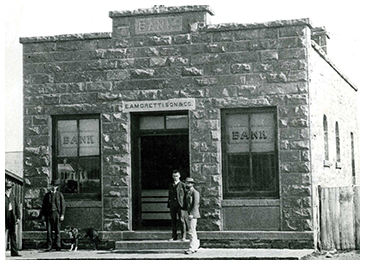
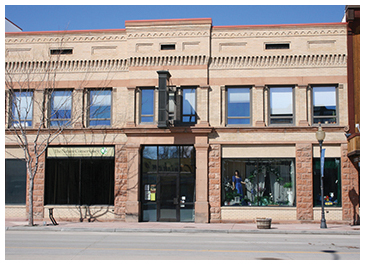
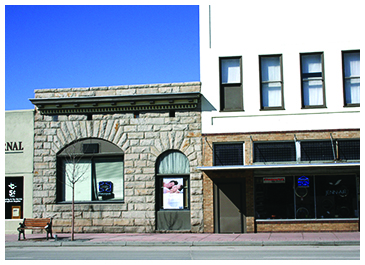
The Amoretti Bank -All that is left of this bank building are the stones on the front. Even though the building did not survive the test of time, the business did. Through the years the bank, has many times over, changed locations owners, and names. Presently it is the Bank of the West.
The first bank in Lander was simply known as Amoretti’s Bank. The bank’s true beginnings started in Eugene Amoretti’s store and then moved into the stone building . S. Contant Parks purchased an interest in the bank and it changed to Amoretti and Parks.
Eugene Amoretti, Sr. was a well-educated immigrant from Italy. He was ambitious and had an aptitude for business. Some of his business ventures included mining, mercantile stores, real estate, livestock industry and banking. He was also instrumental in getting the Lander Roller Mill established, owned interest in the Lander Electric and Power Co. and pushed for support to get a railroad into Lander. He was the first Mayor of Lander and served in the legislature.
During Harold Parks’ ( descendant of S. Contant Parks) oral history interview he was asked how Eugene Amoretti, Sr. started the bank. He explained that Mr. Amoretti was running his store and quite often the stockmen would give their money to him for safekeeping.
If they needed a sack of flour, or a side of bacon, or some salt, he would charge them for it. If there was money at the end of the month, he gave it to back them. Finally, someone said, “Well you are in the banking business why don’t you start a bank?” Mr. Amoretti said, “How do you start?” Someone told him to paint a Bank sign on a board and hang it up. Harold Park’s oral history also revealed that the bank did not have a vault; the money was placed in tin cans and buried underneath the store.
The two-story Noble and Lane Building
320 Main Street
The two-story Noble and Lane Building -This building was the second home to the Noble and Lane Mercantile Business. The face of the mercantile building has changed. It was originally built by Worden P. Noble and Albert D. Lane in 1891. The stone building next to it is where their banking business was housed. This building resembles very closely how it looked in 1891.
An article in the Fremont Clipper newspaper, June 12, 1891, reported that Noble and Lane hired John A. Thompson to construct a “two-story brick business block on the site of their present store.” “The building is to be thirty-one feet front with plate glass windows. The entire lower floor will be occupied as a general salesroom; above, there will be two sets of offices in front, and in the rear a hall, twenty-nine by forty-two, with two rooms, available for lodging purposes. There will be front and back stairways. The present store building will be moved to the lot west of where it now stands, and be occupied by the firm until the new building is completed; the two wings are to be at once torn down. The contractor states that the building is classed as an $8,000 structure, but will cost considerable more than that by the time it is ready for occupancy. The building will be a great ornament to the street, and people will be exceedingly glad to learn that Messrs. Noble & Lane have decided to take such a business step.”
At the age of 21, Worden P. Noble entered into the general merchandise business in Atlantic City. He ran his business for one year and then moved on to his freighting business. In about 1880, he became a licensed Indian trader and started a store at the “Shoshone Agency.” He took in his bother-in-law, Albert D. Lane, as an associate and by 1885 opened their first store in Lander. In 1890, Noble’s younger brother, Fred F. Noble, joined them and they added the banking to their business.
The Federal Building and Post Office
177 North 3rd Street
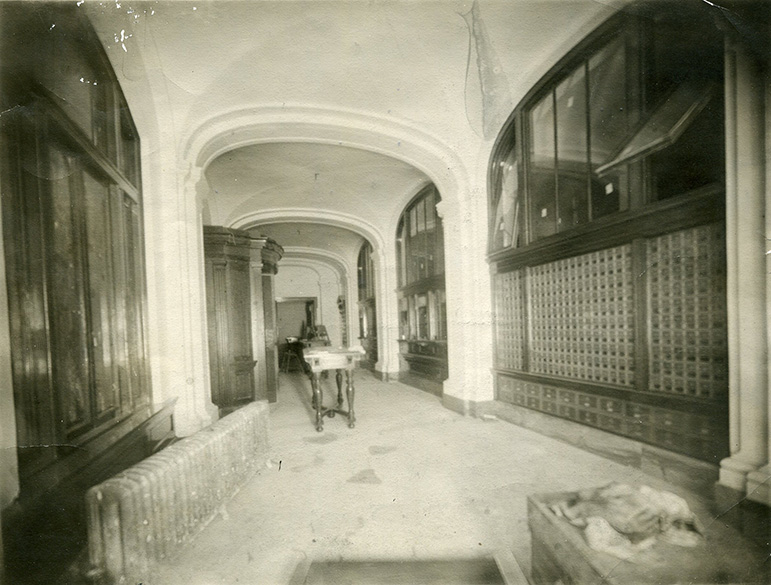
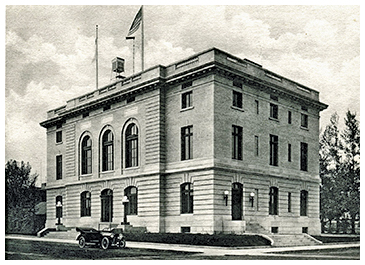
The Federal Building and Post Office -Lander’s historic, “old Post Office,” and Federal Building was completed in March 1912. The population of the town was about 1,812 and the city’s growth and development were underway. The plans for the building were extensive, including at the back of the building, hitching racks for mail carriers horses and mail wagon teams.
It took nearly two years to build this fine stone building. Construction began in June, 1910, and was completed March, 1912 for a total cost of $150,000.
In the early stages of the planning, The Public Affairs Committee of the Lander Commercial Club wrote to the supervising architect and was told “the Lander area has marble, granite and sandstone that would be suitable for the proposed new building.” But the federal government vetoed the local building materials and instead, Vermont granite, Bedford limestone, Denver, brick, Chicago terra cotta, Philadelphia structural steel, Oregon, lumber and barrels of white Portland cement imported from France were all transported to Lander by freight train cars.
It is a beautiful structure of granite and brick. In the basement (4712 square feet), there were restrooms for the mail employees of the post office, fuel room, engine room, and storage rooms. The Wyoming State Journal newspaper reported “in the basement the clerks have shower baths, and everything tending to comfort and health.” The rooms in the basement were furnished “as high class as any portion of the building.” The post office was assigned the entire first floor. On the second floor was the United States Court and officers of the court, the U.S. Marshall, U. S. Attorney, Clerk of the Courts, jury rooms and restrooms. The building was wired for either electric lights or gas, and two telephone systems. The U.S. Weather Bureau also had rooms that were the entrance to the roof where the equipment could be reached. The lamps on the outside the building lit up the building at night. The controls for these lights are in the basement.
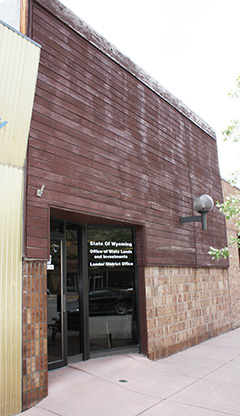
Rhein’s Hardware & Sheet Metal Store
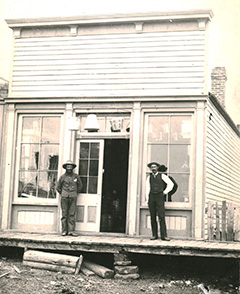
William H. Rhein’s hardware and Sheet Metal store (now the Wyoming State Lands Office at 277 Main St.) was established in 1886. In addition to hardware his store carried a fine line of cutlery, tools, stoves and groceries. A modern day building for its day as it was the first Main Street Store to have plate glass windows. It was quite an accomplishment because the glass had to be brought in by a freight wagon over rough roads and steep hills.
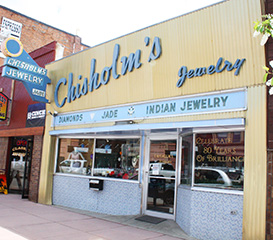
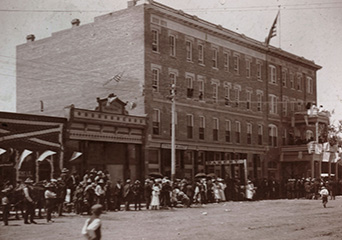
Lander Eagle Newspaper
Lander Eagle Newspaper – 1911 (now Chisholms Jewelry 273 Main)
Chisholm’s Jewelry, a building that once housed the newspaper office of the Lander Eagle. William Rhein also owned this building and it was built around 1888-1889. Prior to housing the newspaper, it was John Painter’s Barber Shop. Right before Mrs. Josephine Chisholm purchased the building in 1935 it housed a tailor shop and dry cleaners.
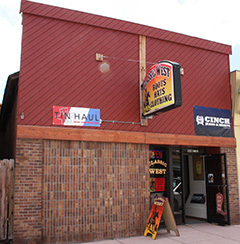
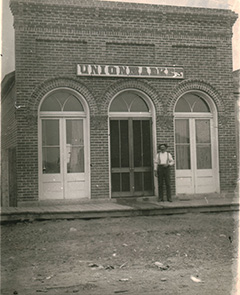
Union Market
Union Market – 1886 (now Classic West 267 Main )
The market was owned by early day pioneer Jules Lamoreaux and opened about 1886. Jules Lamoreaux was one of the most successful cattle ranchers in the Lander Valley. Opening a butcher shop to sell his beef fit right in with his business activities. He was active citizen and served as the town’s second mayor and his family has a long and well-known history in the Lander area.
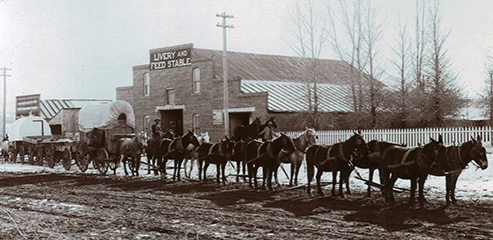
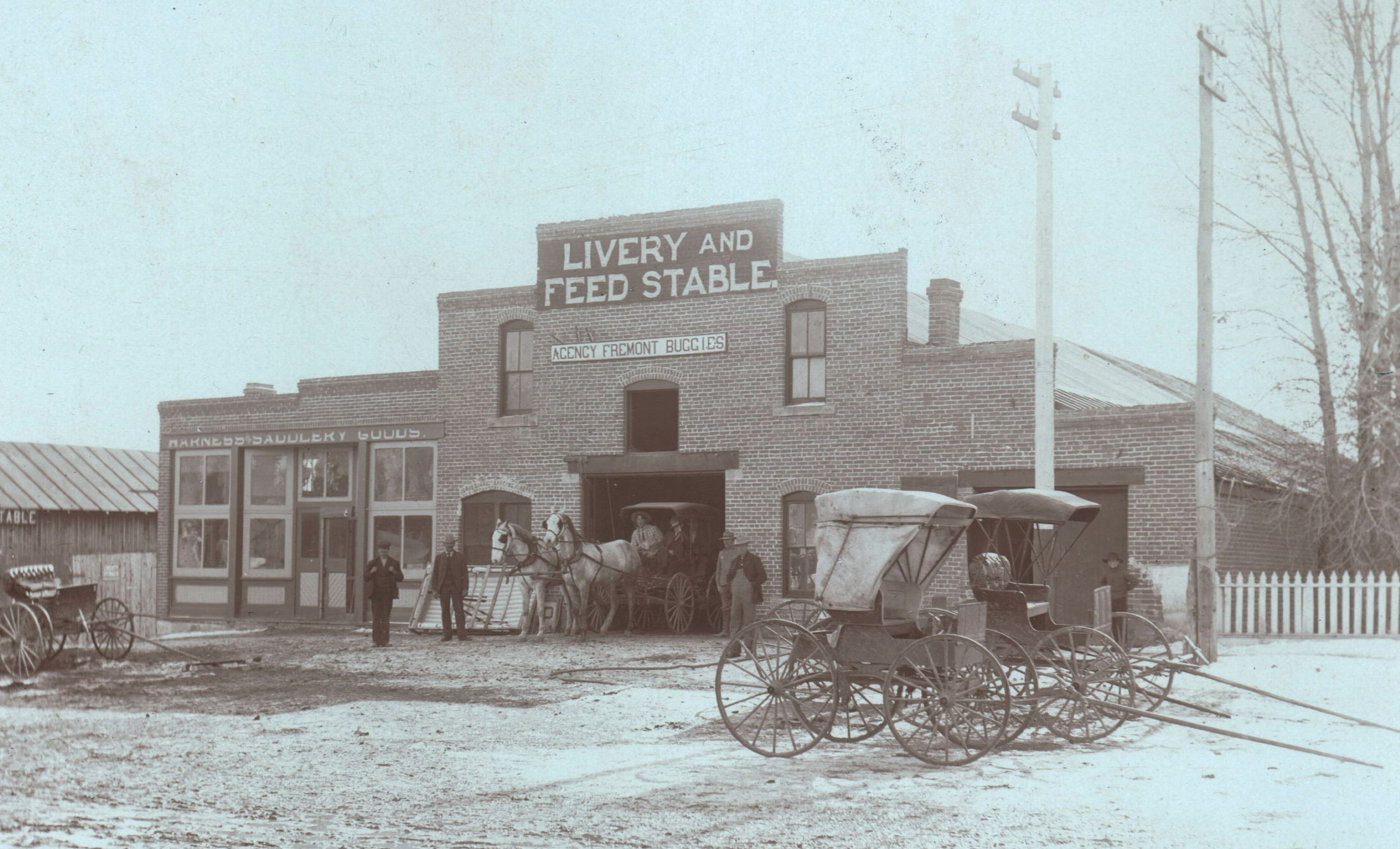
Vaughn’s Livery Stable
Vaughn’s Livery and Stable – 1891 (now Lander Christian Center 183 Main St.)
Originally from Illinois, William Lorenzo Vaughn settled in Lander at the age of 22. He made his living as a rancher and later went into the livery business. Prior to his large brick livery stable, he had a smaller operation boarding horses.
Long before there were cars and garages, there were horses and livery stables. When Vaughn opened up his livery business the only way mode of transportation was by horseback or on foot. The railroad did not arrive until 1906.
Those horses had to be fed and boarded. Vaughn saw the opportunity and in 1891 he expanded his livery business. The newspaper reported “Lander’s enterprising liveryman, William Vaughn, is making arrangements for the erection of a large livery stable.” The original brick building was thirty by sixty with room for additions. His business thrived. He boarded and rented out horses, carriages and wagons to both locals and travelers. The livery also sold hay, grain, coal and wood.
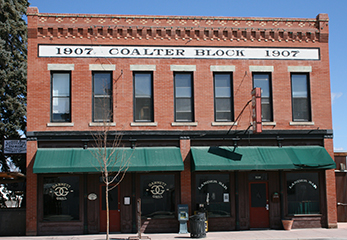
Coalter Hotel
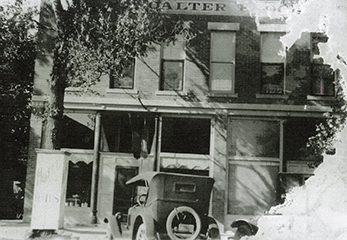
Coalter Block – 1907 (now Gannett Grill 126 Main)
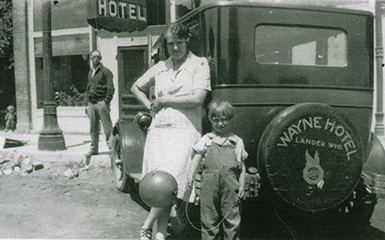
Originally was known as the Coalter House. Thanks to the coming of the railroad to Lander in 1906, new businesses developed along Main Street. William Coalter had the advantage of having his hotel across the street from the railroad depot. His “House” provided lodging, meals and for an extra 25 cents you could purchase a hot bath. He sold it in 1918 and for a while it was the Wayne Hotel. Motels, bars and eating establishments have always served the community from this building.
William Coalter arrived in Lander in 1884 and lived here until his death in 1926. During those years he was an enterprising businessman. He first opened the OK Saloon and an opera house. It was known as “Coalter’s Hall” and was located a few blocks from the present “Coalter Block.” All the social functions took place at Coalter’s Hall.
Lander Brewing Company & Rhodes & Gilbert Taxidermy
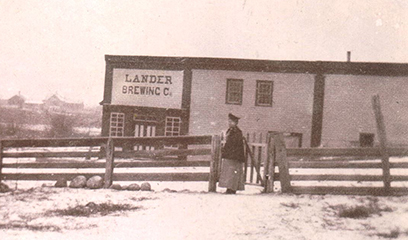
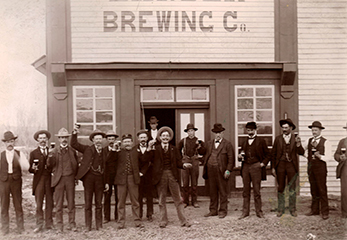
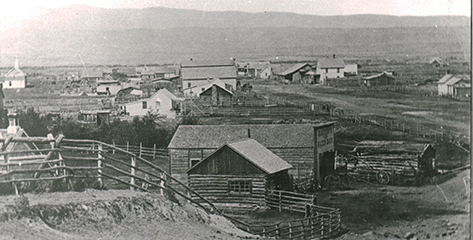
Lander Brewery – 1886 (now Pronghorn Lodge 150 E. Main)
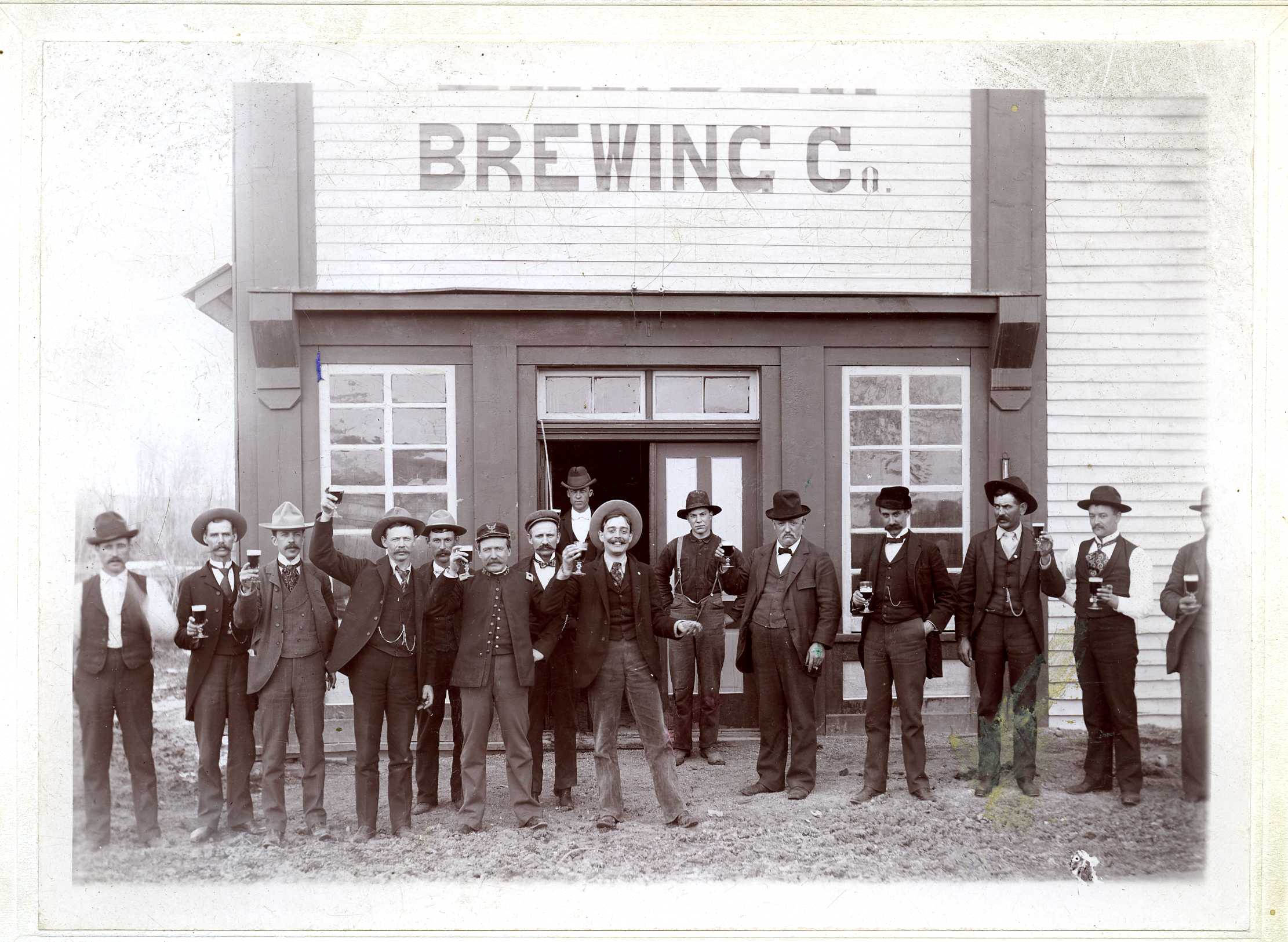
Charles Hart officially opened his business, the Lander Brewery, in 1886. He was an immigrant from Germany who settled in Lander sometime in the 1870’s. At this time brewing beverages was on a primarily small-scale and was usually done in the home. Charles Hart started out producing forty-five barrels of beer and by 1885 was producing five hundred. This enterprising German moved to the next phase in his business and in 1886 purchased six lots near the present –day Pronghorn Lodge for the sum of $300.00. In 1887 the newspaper, Wind River Mountaineer, reported that Hart now had a “substantial two-story brick malt house and brewery establishment, where a good article of beer is being brewed from malt produced from barley raised by our farmers.” Hart’s malt house was designed to hold one thousand bushels, and he had two ice houses and a saloon on the premises.
Nine years after expanding his business, Mr. Hart must have fallen on hard times. As his property and equipment was sold at a public sale on September 14, 1895. He was sixty-two years of age.
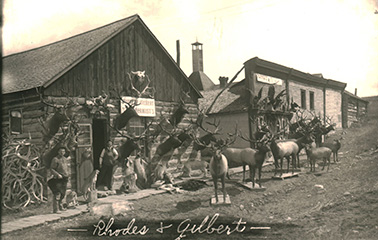
In this same area was Swire Rhodes – Taxidermy. Swire Rhodes was born and educated in England. By 1899, he had worked his way west and settled in Lander. In the early 1900’s he opened a taxidermy shop. In 1906 he expanded his business by adding tanning of hides to his services. He partnered with man named Gilbert and the business became Rhodes and Gilbert. Gilbert was well prepared to do all kinds of tanning including making fur coats and lap robes.
The skills needed to be a taxidermist and a tanner were only one part of the business. They needed skins and furs. They advertised for trappers to sell their animals to them. Another means to obtain “inventory” was from hunters. In the late 1800s and early 1900s, game hunting and trophy hunting were at their peak periods. In 1910 Rhodes and Gilbert would even exchange the skins and furs for silver and gold.
They had a booming business and a good reputation. In 1908, George Eastman, the noted Kodak camera manufacturer, came to Lander to hunt and hired Rhodes and Gilbert to mount his trophy. This was also the fashion industry period when fur coats, stoles and hats were popular. Rugs were an item too. In 1908 they sold a mountain sheep skin rug for $125.00. A nice sum of money in 1908.
Across the street (Maverick) from the Brewery was Ervin F. Cheney’s Livery. Cheney moved from South Pass City to Lander in 1878 and established a wagon shop and livery. He spent the rest of his life (died in 1922) ranching, running his livery and was active in civic matters. He was the first to arrive upon a grisly scene that took place about six miles from Lander. He found the mutilated bodies Dr. Barr, Jarome Mason and Harvey Morgan who was killed by some Sioux Indians. Harvey Morgan had a “king bolt” from a wagon driven through his head. Morgan’s skull is on display at the Pioneer Museum.
City Drug Store
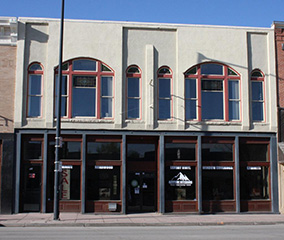
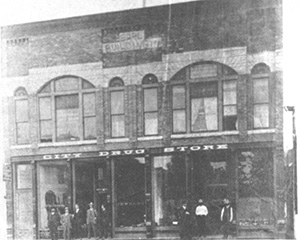
City Drug Store – 1894
City Drug store was founded on November 23, 1894, by H. P. Bower and Stephen Douglas Keister. They originally opened up in a building on the corner of Third and Main Street.
Then about 1900 Guy and Fred Earl bought the drugstore and in 1907 built a new two story building known as the Earl Building. The cost of erecting the new building made of brick and stone was $10,000.00. The drug store was on the first floor. The telephone company and switch boards shared the second floor with rooms that were rented out to doctors and dentists.
City Drug was in business at this location business until 1975.
Lander Mill Grain Tower
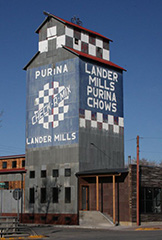
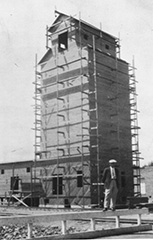
Lander Mill Grain Tower – 1927
The local mill produced flour that was a hit with the local businesses and townspeople. The “Wyoma” flour and the breakfast cereal (similar to Cream of Wheat) were in demand. Before the grain tower was built, there was a hopper on the side of the mill. Farmers would bring their wheat in by wagon or truck and scoop or shovel the wheat into the hopper for storage in basement pit.
Lander Mill continued to produce a lot of flour so in 1927 a large elevator tower was built to store excess wheat. The railroad track was right beside the evaluator and a pipe coming from the elevator enabled operators to move the grain from building to building and to railroad cars. The production of flour, cereal, and the marketing of extra grain made the Mill a successful business.
In 1928 the Lander Mill became the first “franchised” dealer of “Purina Chows” livestock feed in the state of Wyoming.
Orchard Building
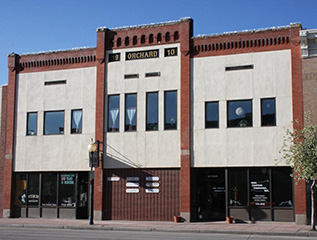
Orchard Building – 1910
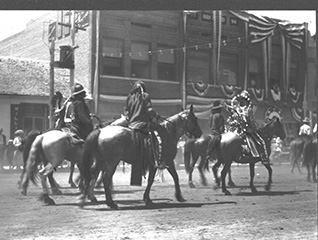
Charles Orchard bought this piece of property around 1908 from William Coalter. One of Coalter’s earliest businesses, “Coalter Hall and Opera House,” was on this site. The Hall and Opera house served as a venue for most of Lander’s social activities, including operas and plays. The frame building burned down shortly after Orchard purchased the property. It didn’t take Orchard long to rebuild the historic building you see today. He rented the building out to local business people. One of his earliest renters was the Epicure Market and Grocery.
Woodruff Mercantile
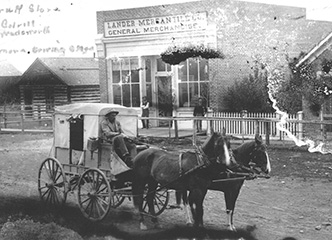
Lander Mercantile Company – 1888
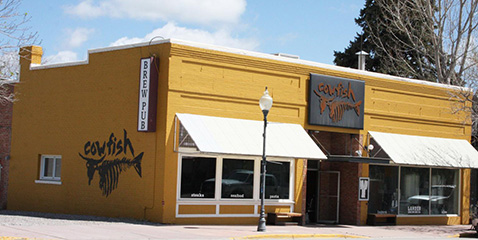
The Lander Mercantile Company was simply known as Woodruffs. John Dwight Woodruff’s store opened up for business in about 1888 in a large brick building owned by Eugene Amoretti, Sr.
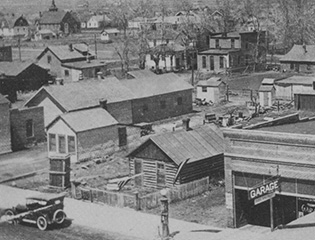
He didn’t remain at this location very long as he soon commenced work on his own brick building. However, this brick building has a long history and has housed many businesses including Wah Lee’s Chinese laundry and bath house. In addition to his laundry and bath house he sold Chinaware, “imported direct from China.” In about 1919 the building was Jerry Sheehan’s garage and ford dealership.
Woodruff was a man who had many interests and politics was one of them. His political career began when elected state senator in 1890 and again in 1923.
Wind River Mountaineer
Wind River Mountaineer Newspaper – 1885
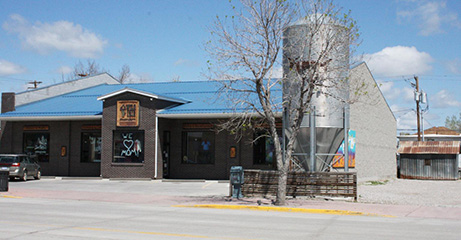
Issac C. Wynn printed his first edition of the Wind River Mountaineer newspaper, January 1, 1885. He started his business in a very modest log building that was set back from Lander’s Main Street.
The paper featured local news and a variety of advertisements.
Mr. Wynn, more than likely, at the time did not realize his newspaper would end up being a valuable historical record of frontier life in Lander.
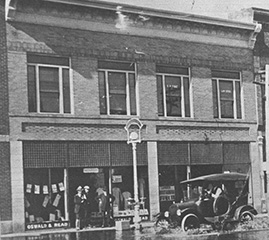
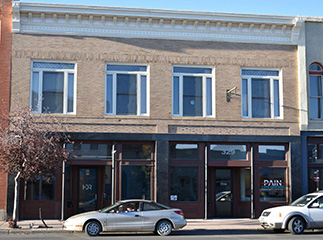
Adams-Heron Building
ADAMS-HERON BUILDING – 1908
The history of the building begins with an early pioneer, William T. Adams.
In 1898 President McKinley appointed William T. Adams as Register of the U.S. Land Office in Lander. He held this position until about 1910.
In 1908, he partnered with Mr. Heron and, as reported, in the Wind River Newspaper, “ erected the Adams & Heron Building in record time.”
The Adams and Heron partnership lasted a couple of years. In 1910 Robert Bragg bought out Heron’s interest in the building for $8,500.00. Bragg was a successful sheep rancher. As early as 1881 and was known as a “Pioneer Sheep Man.”
The building was an investment for the owners of the building. They rented office space to individuals and businesses. In 1911, surveyors working on the Louis Lake Irrigation project rented four rooms.
The tenants who were in building the longest were the merchants, Walter Oswald and Leslie Read. In 1908 they leased the east side of the building and opened up their Oswald & Read “gents furnishing goods.” It was an upscale men’s clothing store.
By 1915, both Fred Bragg and William Adams moved from Lander. It then became the Oswald & Read building. The store was open until the mid-1930. In 1930 J. H. Watson bought out Oswald and Watson and Read operated the business until Read’s health failed. He died in 1940.
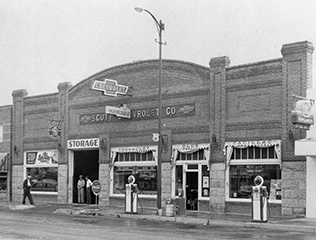
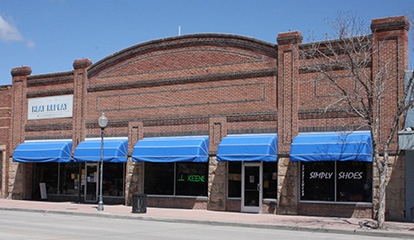
Scott Cheverolet
Scott Chevrolet Co. – 1930
Floyd Scott was called the “Wyoming Pioneer” in the Chevrolet Automobile business. Lander’s transition from horse and buggy to the automobile was slow. But in about 1913 the “horseless carriage” age began to take shape. In 1915 this property was the site of Barney Beard’s garage and then Fremont Garage. In January, 1915, it was razed by fire and again in January 1930. All that was left were the stone pillars in front of the building. The owners (Harnbergers) rebuilt it in March and leased it to Floyd and Otis Scott.
Coalter’s Opera House & Bar
COALTER’S OPERA HOUSE and BAR – 1884-1907
William M. Coalter started up his Saloon and Opera House business in about 1884-85. The business was referred to as Coalter’s Hall. He arrived on the scene when he was 34 years old and lived the rest of his life in Lander. He was an active and progressive business man.
The main purpose of the Opera House was for plays but it was also used as a meeting place and for wedding receptions. In 1899 it is reported the “Lander Dramatic Company, a talented lot of young people,” performed a comedy “Uncle Josh.” Reserved seats cost 75 cents and the general admission was 25 cents.
Coolidge Building
Coolidge Building – 1918
This building was built in sections. It started out as one building and within four years it was expanded to include two additional stand-alone structures.
C.B. Coolidge moved to Lander from Lead, South Dakota where he had other business ventures. He recognized an opportunity to make an investment in Lander and purchased property to build his building.
The Coolidge building was advertised in May 1918 as the “new two- story brick building” built next to the City Drug Store. As soon as it was completed, John Benson moved his furniture store into the building
It did not take long before Coolidge started work on another building, located right next to the first one. He had plans to rent the building out to Lander Rubber Works. The upstairs would be divided into office rooms.
Mr. Coolidge had several partners, and one of them was Miss Maude Faust. In 1921, she purchased the next lot and Coolidge built the third section of the complex. This section was rented out to the Golden Rule Store, later re-named J. C. Penney, Co. The upstairs was divided into apartments. The apartments were known as the “Faust Apartments.”
Lander Mercantile
LANDER MERCANTILE – 1890
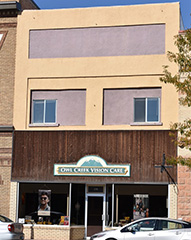
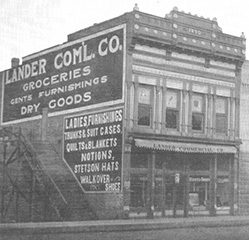
John Dwight Woodruff started his Lander Commercial Company business in the first block of Main Street in about 1888 in a large brick building owned by Eugene Amoretti, Sr. He didn’t remain at this location very long as he soon commenced work on his own brick building in the second block of Main Street. Woodruff was one of Lander’s earliest pioneers. He had several business ventures and was active in politics.
The building was finished just in time for the Wyoming Statehood Ball in November, 1890. The first floor of the building was for his mercantile business and the second floor was known as the “Woodruff Hall.” For the Statehood celebration most of Lander’s population managed to squeeze into the upstairs ballroom. For the many years, the Woodruff Hall was used for local dances and celebrations.
In 1890, he and his partner, W. A. Wallace, were open for business. He bought out Wallace in 1892. After operating the business for 12 years he sold the building to Lander Masonic Lodge.
Camp Auger
CAMP AUGUR – 1869
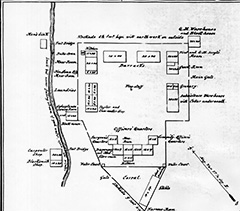
Camp Augur, a small military post, was established at the future site of Lander in June, 1869. Original purpose was to protect the friendly Shoshones from enemy tribes; it served as protection for the white settlers as well.
At Fort Bridger in 1868, Chief Washakie, leader of a small band of Eastern Shoshone Indians, signed a treaty with the government for the creation of a reservation in the Wind River Valley for the exclusive use of the Shoshones. However, the reservation in the Wind River Valley put his people within range of their enemies – the Sioux, Cheyenne and Arapahoe tribes. Chief Washakie would not move his people onto the reservation until military protection was provided for his small band.
The Fort was built in a triangular formation. The buildings were made of unhewn logs and had dirt floors. More than likely the Fort also had observation towers. Two good streams of water were nearby.
In 1870 the fort was moved 15 miles north and in 1878 renamed Fort Washakie after Shoshone Chief Washakie.
A few settlers had already squatted on the land in the vicinity of Camp Augur/Brown and it wasn’t long before the mine fields began to play out and many disheartened miners headed down to the “warm valley” to settle. The area had plenty of wildlife, an abundance of water, and a warmer climate. After the military site was no longer on reservation lands and was the supply route to the new post, it was an opportune time to start new businesses for freighters and travelers to the military post. The seed for the town of Lander was planted.
Benjamin Frank Lowe, one of the founding fathers of the town, proposed to name the town Lander, in honor of General Frederick Lander of the United States army. Lowe had been associated with Lander and guided him through the South Pass country.